Hawaiian Feathered Friends Network
Hawaiʻi’s Premier Parrot Rescue · Education · Community Support · Parrot Club Organization
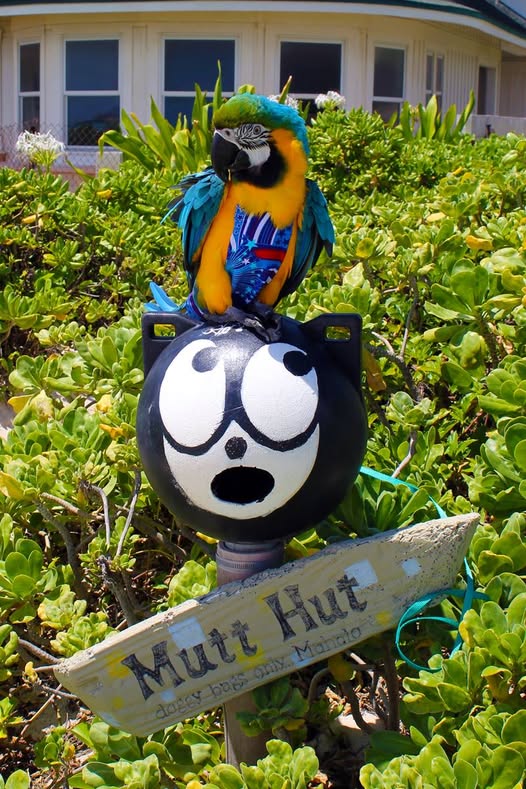
Harness Training Safe outdoor time is one of the greatest gifts you can give your bird
A properly fitted harness opens up a world of enrichment — fresh air, natural sunlight, new sights and sounds, and the chance to share your life outside the home. It takes patience to get there, but the result is worth every step.
The Value of Safe Outdoor Time
Parrots evolved in the open air — in forests and savannas where natural light cycles govern their hormones, fresh breezes carry a thousand scents, and the world is full of sound and movement. Captive parrots live in environments that, however enriched, cannot fully replicate those sensory experiences. A harness changes that.
Natural, unfiltered sunlight is the most bioavailable source of Vitamin D3 for birds — more effective than any supplement or UV lamp. Brief daily exposure to direct sun supports bone health, feather quality, immune function, and hormonal regulation. Beyond the physical benefits, outdoor time provides psychological enrichment that indoor environments simply cannot match: new sounds, new smells, the sensation of wind, and the stimulation of a world that is genuinely, unpredictably alive.
In Hawaiʻi, we are especially fortunate. Our weather is gentle year-round, our landscapes are lush and beautiful, and taking a parrot outdoors is a genuinely pleasant experience for bird and guardian alike. The tradeoffs — primarily predator risk, escape risk, and disease exposure — are all manageable with the right preparation.
A harness-trained bird is a bird whose world is larger than its cage, its room, or its house. That matters enormously to a creature as intelligent and curious as a parrot.
Candidacy: Not Every Bird Is a Good Candidate
Harness training is wonderful — but it is not right for every bird, and pushing an unwilling or fearful bird toward it causes more harm than good. Before beginning, honestly assess your bird against these considerations:
- Temperament: Confident, curious, food-motivated birds generally take to harness training well. Chronically anxious, phobic, or severely stressed birds may find the process deeply distressing. Read your individual bird honestly.
- Age: Young birds introduced to harnesses early — ideally before fledging — adapt most readily. Adult birds can absolutely be trained, but it typically takes longer and requires more patience.
- Foundation training: A bird that already steps up reliably, is comfortable being handled, and has some positive reinforcement training experience will progress through harness training much faster than one without these foundations. Establish the basics first.
- Health: Never begin harness training with a bird that is unwell, undergoing treatment, or recovering from illness. The stress of new learning requires a bird in good physical condition.
- Your commitment: Harness training done slowly and positively over weeks or months produces a bird that genuinely enjoys wearing it. Done impatiently or with force, it produces a bird that dreads it. Be honest about whether you can commit to the pace the bird sets.
Some parrots — particularly those with trauma histories, certain phobic tendencies, or simply strong individual preferences — will not accept a harness regardless of how carefully the training is approached. This is not a failure. A bird that clearly finds the harness experience distressing after a thorough, gentle training attempt is telling you something important. Respect that answer and explore other ways to provide enrichment.
Choosing a Harness
The harness must fit correctly — too loose and the bird can escape or become entangled; too tight and it restricts breathing and movement. A proper harness encircles the body in a figure-eight configuration, with one loop around the neck and one around the body, connected across the back where the bird cannot reach to manipulate it.
Aviator Harness
The most widely used and recommended harness for companion parrots. Available in a full range of sizes from parrotlet to macaw. Lightweight, escape-resistant, and designed to be put on and taken off with minimal fuss once the bird is trained. The leash connects at the back, which most birds cannot reach. Generally considered the gold standard for companion parrot harnesses.
- Full size range available
- Proven escape resistance
- Easy to fit correctly
- Widely used by experienced aviculturists
Avian Fashions Flight Suit
A lighter-weight alternative with a slightly different configuration. Some birds accept the Flight Suit more readily than other harnesses due to its different feel while wearing. The bonus aspect is the Flight Suit also acts as a diaper to catch droppings, so you stay clean and neat while your bird comfortably perches on your shoulder. Wide range of size options from the smallest parrots up through Hyacinth Macaws. An equally wide range of color choices, patterns, and fun seasonal designs (Santa style suit for Christmas, Tuxedo style for weddings and formal events). Definitely worth trying a Flight Suit for your bird.
- Lighter feel — some birds prefer
- Different entry method may suit some birds
- Built in diaper keeps droppings contained
- Wide range of sizes and color choices
A harness that is even slightly too large is an escape waiting to happen — and an escaped bird outdoors is in immediate danger. Measure carefully and follow the manufacturer’s sizing guide precisely. When between sizes, err toward the smaller fit and verify the bird can breathe comfortably. Check fit before every single outdoor outing — birds’ weights fluctuate and harness elasticity can change with use.
Step-by-Step: Training at the Bird’s Pace
Harness training is desensitization work — systematically introducing the harness in small, non-threatening increments, pairing each exposure with something the bird values, until the harness becomes a neutral or positive object. There are no shortcuts. Rushing any step sets back all the steps before it.
Keep sessions short — five to ten minutes maximum. End every session before the bird loses interest or shows stress, ideally on a positive moment. Daily sessions are ideal. Progress is not linear; a bird may seem to regress after days of progress, especially during hormonal periods or after stressful events. Patience is the skill being practiced here as much as harness tolerance.
Staying Safe Outside
A harness significantly reduces escape risk but does not eliminate it, and it does nothing to address other outdoor hazards. Every outdoor outing requires active attention to safety — not as an anxious exercise, but as a calm, prepared habit.
A harnessed parrot left alone outside — even briefly, even in a seemingly safe enclosed space — is at risk from predators, entanglement, heat, and panic. The harness prevents escape but it does not prevent injury. Your presence and attention are as much a part of the safety system as the harness itself.
Recall: The Safety Behavior That Can Save a Life
A reliable recall — flying to you when called — is the most important safety behavior a flighted bird can have, and it pairs naturally with harness training as a foundation for outdoor adventures. Even a harnessed bird may slip free in an emergency. A bird that has a solid recall has a far better chance of being recovered.
Recall is trained using exactly the same positive reinforcement principles as any other behavior. Begin indoors with very short distances, using a highly distinctive recall cue — a specific word, whistle, or phrase used only for recall — and a high-value reward the moment the bird flies to you. Gradually increase distance indoors before ever attempting recall outdoors.
Outdoor recall practice should begin in a fully enclosed space — a large screened lanai, a netted aviary, or a completely fenced and screened yard. Never practice recall outdoors in an open space until the bird’s indoor recall is extremely reliable under distraction. The stakes of getting this wrong are too high to rush.
Harness training is one of the most rewarding things you can do with a parrot. Walking along the beach at Waimanalo with a macaw on your shoulder, or sitting on your lanai watching the mountains with your Grey settled contentedly in the breeze — these are moments that remind you exactly why parrots are so extraordinary. The weeks of patient training that get you there are completely worth it. The HFFN ʻohana is happy to share tips and experiences from our own harness training journeys — reach out any time.