Hawaiian Feathered Friends Network
Hawaiʻi’s Premier Parrot Rescue · Education · Community Support · Parrot Club Organization
Evacuation Preparedness Fire, hurricane, tsunami — your plan must exist before the emergency does
Hawaiʻi faces a range of natural hazards that can require immediate evacuation with no warning. Parrots cannot be evacuated on instinct alone. The plan — and the supplies — have to be ready before you ever need them.
We Live in One of the Most Hazard-Prone Archipelagos on Earth
Most emergency preparedness guides are written for the mainland — where a hurricane gives days of warning, wildfires spread predictably, and evacuation routes are well-established. Hawaiʻi is different. Our hazards are different, our geography is different, and the speed at which emergencies escalate here demands a higher level of readiness than most bird owners have considered.
🔥 Wildfire
The 2023 Lahaina fire demonstrated what Hawaiʻi residents already knew: wind-driven fire can move through a community in minutes. The time between “there’s smoke in the distance” and “you must leave now” can be measured in minutes, not hours. Birds must be secured and loaded before you can safely leave.
🌊 Tsunami
Tsunamis triggered by distant earthquakes give hours of warning via the Pacific Tsunami Warning Center. Local tsunamis — triggered by an earthquake directly offshore — may give only minutes. If you feel a strong, long earthquake near the coast, do not wait for sirens. Move to high ground immediately, birds in hand if possible.
🌀 Hurricane
Hurricane season runs June through November. A direct hit brings sustained winds, flooding, and power outages that can last weeks. Unlike fires and tsunamis, hurricanes give time to prepare — use it. Have your go-bag packed and your evacuation destination identified before a storm threatens.
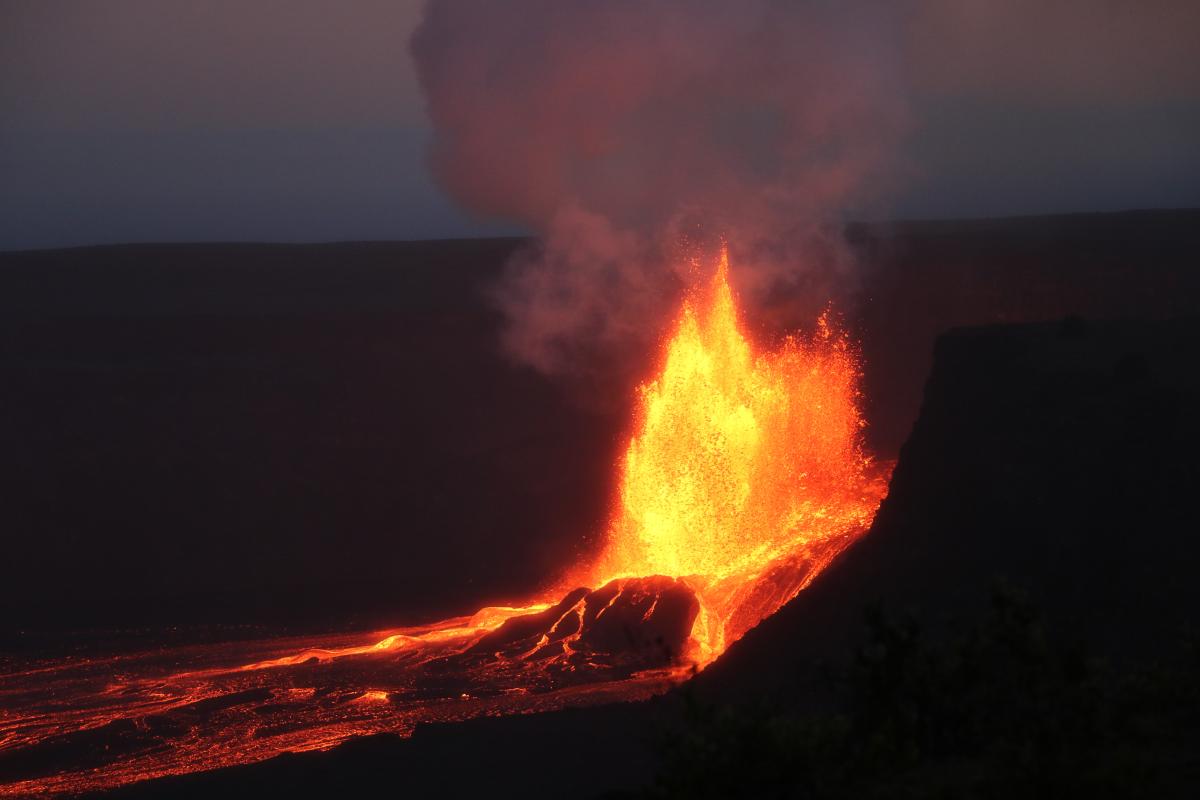
🌋 Volcanic Activity
Primarily a Hawaiʻi Island concern, volcanic eruptions and laze (lava-ocean interaction) can require extended evacuation of entire communities. Vog (volcanic smog) affects air quality across all islands during active eruptions and is a respiratory hazard for parrots. Birds in vog-affected areas should be kept indoors with air filtration.
🌧️ Flash Flooding
Hawaiʻi’s steep terrain and intense rainfall events can cause flash flooding with almost no warning. Low-lying aviaries and outdoor enclosures are particularly vulnerable. Know your property’s flood risk and have a plan to move birds to higher ground quickly.
⚡ Structural Fire
A house fire is the most likely emergency most bird owners will ever face. It can start at any hour, spread in minutes, and produce smoke that is lethal to birds — PTFE fumes from overheated non-stick cookware can kill a bird in the next room within minutes. Your household fire escape plan must include your birds.
The Pillowcase Method
When seconds matter — fire spreading through the house, a tsunami siren, a sudden mandatory evacuation order — hunting for carriers, assembling them, and coaxing birds into them one at a time is not realistic. The pillowcase method is the fastest way to secure multiple birds and get out the door when there is no time for anything else.
The technique is simple, effective, and widely recommended by experienced aviculturists and emergency preparedness experts. The key is to prepare your pillowcases before an emergency and to practice the technique so it becomes automatic under stress.
- Pre-stage your pillowcases. Keep clean cotton pillowcases in or immediately next to each bird’s cage — not in a linen closet across the house. In a fire, every second of searching costs you. Label each pillowcase with the bird’s name using a permanent marker.
- Open the pillowcase fully and hold it with both hands at the opening, ready to receive the bird. Work quickly and calmly — your energy transfers to the bird.
- Place the bird inside by guiding it in headfirst or simply scooping it in. If the bird is not stepping up, use a small towel to gently scoop and guide — do not chase the bird around the cage, which wastes critical time and panics the bird further.
- Fold the neck of the pillowcase over itself two or three times and secure with a rubber band, twist tie, or simply hold it firmly twisted in your hand. The fold prevents the bird from seeing daylight at the opening (which would encourage escape attempts) and prevents the band from catching around the bird’s neck.
- One bird per pillowcase, always. Never put two birds in the same pillowcase — even birds that live together will fight in the dark when stressed, and injuries can be severe.
- Carry out the door. Once you are in a safe location, you can transfer birds from pillowcases into carriers. You can even drop the whole pillowcase gently into an open carrier and allow the bird to find its own way out — this is often less stressful than forcing a second handling.
- 100% cotton pillowcases — breathable
- Clean, thin fabric — birds can breathe easily
- One pillowcase per bird
- Rubber band or twist tie to secure the fold
- A small towel as a scoop assist if needed
- Plastic bags — birds suffocate quickly
- Sealed boxes or airtight containers
- Paper bags — birds chew through easily
- Heavy or non-breathable fabric
- One bag for multiple birds
The pillowcase method works best when it’s familiar to both you and your birds. Practice it during calm moments — place your bird in a pillowcase for 30 seconds and reward them generously when they come out. A bird that has experienced the pillowcase without panic is far easier to manage in a real emergency than one encountering it for the first time under duress.
Carrier Training: The Foundation
The pillowcase method is your emergency fallback when there’s no time. Carrier training is your primary strategy when there is even a little time. Every parrot should be comfortable entering and resting in a travel carrier before they ever need to use one.
A bird that goes into its carrier willingly — ideally on a verbal cue — saves you minutes of critical time in an evacuation. A bird that panics at the sight of its carrier costs you those minutes and risks injury to itself and you. See our Behavioral & Training page for carrier training guidance.
Keep at least one carrier assembled and ready to go at all times during high-hazard seasons. An empty carrier that has to be built from flat-pack pieces under stress is a carrier that may not get built in time.
The Bird Go-Bag
Your go-bag should be packed, stored near your exit, and checked every six months to rotate food and update any expired items. The goal is to sustain your birds for at least 72 hours without access to your home — longer is better.
Store everything in a single waterproof container — a large zip-lock bag inside a plastic bin works well — positioned where you can grab it in the same motion as picking up a carrier. Every second of searching in an emergency is a second you don’t have.
Microchipping & Permanent ID
A lost parrot without identification is nearly impossible to prove ownership of — and parrots that escape during disasters often end up in shelters, with rescuers, or in the care of strangers who have no way to contact you. Permanent identification is the difference between recovering your bird and losing it forever.
- Microchip — the gold standard. A chip placed by a vet can be scanned by any shelter or vet clinic. Register it with a national database and keep your contact information current.
- Closed leg band — provides a permanent, visible ID number. Document the band number with your vet and in your go-bag records.
- Current photos — clear photos showing your bird’s distinctive markings, colorations, and any unique features. Keep copies in your go-bag and in cloud storage.
- DNA profile — available through avian labs; provides definitive proof of ownership. Most useful for high-value birds.
If you lose a bird during an emergency, post immediately to our Hawaiʻi Parrot & Bird Lost and Found Facebook group and call us at (808) 294-7382. Our network spans all islands and we have experience coordinating search efforts after disaster events.
Where Will You and Your Birds Go?
This question must be answered before an emergency — not during one. Most public emergency shelters do not accept pets. Some accept service animals only. Know your options now.
Research These Options in Advance
- Pet-friendly hotels: Identify pet-friendly hotels within driving distance of your home. Call them now and ask specifically about birds — policies vary widely. Save the numbers in your phone.
- Friends and family: Identify at least two households — ideally one nearby and one on another part of the island or another island — where you could shelter with your birds on short notice. Have that conversation before you need to make the call.
- Hawaiʻi Humane Society: During declared disasters, the Humane Society may activate pet sheltering. Check their website and social media during an emergency for current protocols.
- HFFN network: Our members help each other. If you are facing an emergency and have nowhere to take your birds, contact us — we will do everything we can to connect you with someone who can help.
Evacuating a bird between Hawaiian islands involves Hawaiian Airlines and other carriers’ pet policies, as well as Hawaiʻi’s strict importation rules for certain species. Indian Ring-necked Parakeets cannot be transported between islands under any circumstances. Know your species’ inter-island status before an emergency forces the question.
If You Cannot Take Your Bird With You
In the most extreme circumstances — a fire moving too fast, a tsunami with minutes of warning — you may face the agonizing reality that you cannot safely evacuate your birds. This is a situation to think through now, not in the moment.
Open cage doors to give birds a chance to escape on their own — a bird that escapes outdoors has a chance; a bird locked in a burning building or flooding structure does not. Leave windows open if safe to do so. Leave food and water accessible. Notify HFFN and post to the Lost & Found group immediately with your address, species, and descriptions of your birds so our community can watch for them.
This outcome is preventable in most scenarios with proper preparation. The pillowcase method, pre-staged supplies, and a practiced plan mean that even a fast-moving emergency leaves you with options. The goal of everything on this page is to ensure you never face that choice.
The time to make your evacuation plan is on a calm Sunday afternoon — not when the sirens are going off. Do it this week. Your birds are counting on you to have thought this through before they need you to act on it.
Emergency Contacts & Resources
- Hawaiʻi Emergency Management Agency: dod.hawaii.gov/hiema
- Pacific Tsunami Warning Center: ptwc.weather.gov
- Hawaiʻi Wildfire Management Organization: hawaiiwildfire.org
- Hawaiʻi Humane Society: (808) 946-2187
- Hawaiʻi DOA Animal Industry Division: (808) 483-7102 — for found wild or escaped birds
- HFFN Lost & Found Group: Facebook — Hawaiʻi Parrot & Bird Lost and Found
- HFFN Emergency Line: (808) 294-7382