Hawaiian Feathered Friends Network
Parrots in Hawaiʻi — Hawaiian Feathered Friends Network
Hawaiian Feathered Friends Network Parrot Education · Rescue · Community · Honolulu, Hawaiʻi
Species Guide · Hawaiian Feathered Friends Network

🦜Parrots in Hawaiʻi

Hawaiʻi has no native parrots — but our islands are home to a remarkable and diverse community of psittacine bird owners who keep, love, and care for some of the most extraordinary birds on earth. This is our guide to the parrots of our community.

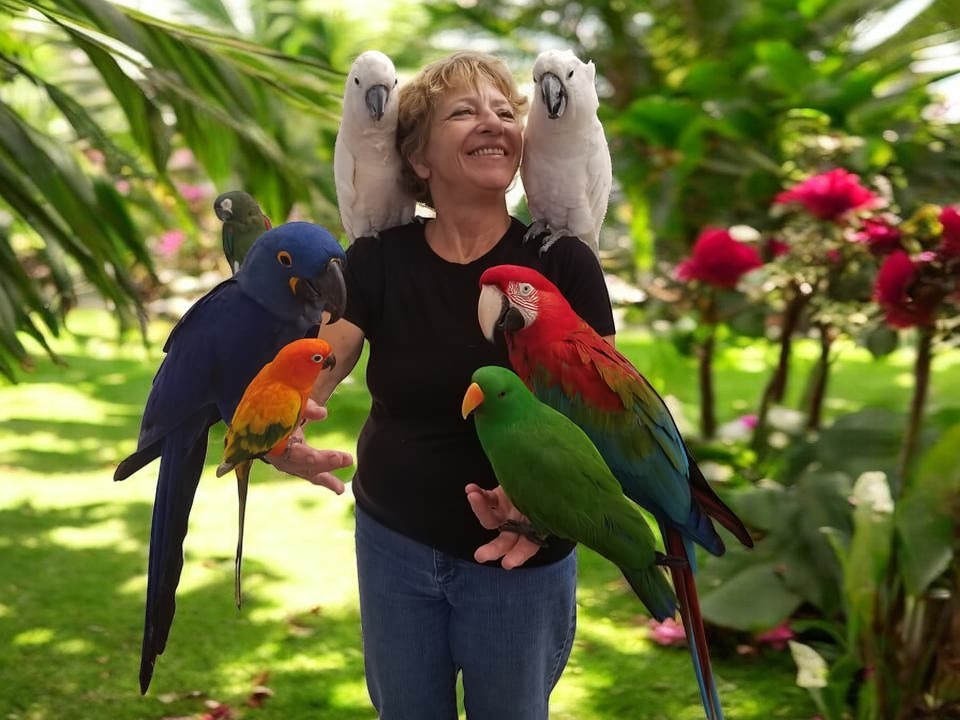
The parrots kept by HFFN members represent nearly every corner of the parrot world — from the vast rainforests of the Amazon Basin to the savannas of sub-Saharan Africa, from the ancient forests of Australia and New Guinea to the island chains of the Pacific and Indian oceans. They range in size from the tiny parrotlet to the enormous Hyacinth Macaw. They range in personality from the serene Meyers Parrot to the exuberant Sun Conure. What they share is a place in the lives and hearts of Hawaiʻi’s bird-keeping community.

HFFN works predominantly with psittacine birds — parrots and cockatoos and pet passerines (finches and canaries). The pages in this section are our species guides: honest, practical, and written from the perspective of people who live with these birds every day. We cover personality, care requirements, health, and conservation — everything a prospective owner or curious enthusiast needs to know. Select a species below to read more.

Wild Parrots of Hawaiʻi
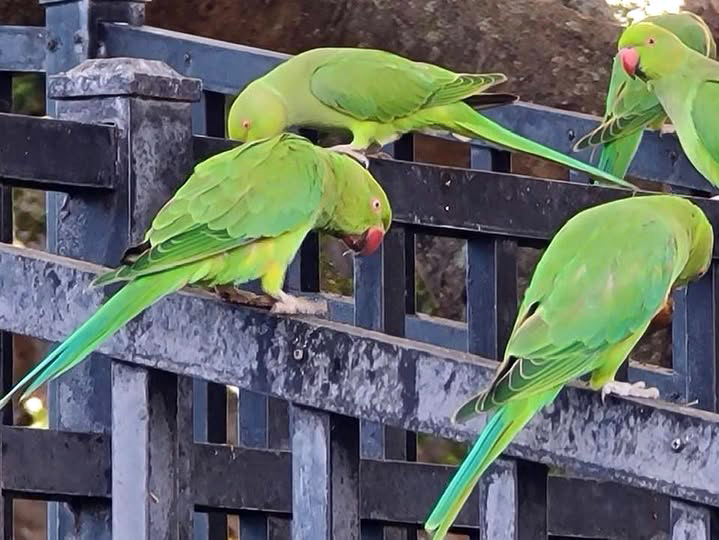
Wild Indian Ringneck Parrots on Oʻahu
🏝️ Hawaiʻi · All Islands

Wild Parrots of Hawaiʻi

Hawaiʻi has no native parrots — but several introduced species have established self-sustaining wild populations across the islands. Rose-ringed Parakeets number in the tens of thousands on Kauaʻi. Red-crowned Amazons breed in the valleys of Oʻahu. Cockatoos have been documented in Mānoa for decades. This comprehensive island-by-island guide covers every established and documented feral parrot species in the Hawaiian archipelago, drawing on the Bishop Museum reference (Pyle & Pyle 2017) and current field data.

Read the full guide
Companion Parrots in Hawaiʻi

The following pages cover the psittacine species most commonly kept by HFFN members and the broader Hawaiʻi bird-keeping community. Each page includes species information, personality, care requirements, health considerations, and conservation status. Click any card to read the full species guide.

African Grey Parrot — HFFN member's bird on Oʻahu
🌍 Central Africa

African Grey Parrot

Psittacus erithacus & P. timneh

The most celebrated talker in the parrot world. Two species — the Congo and the Timneh — with a depth of intelligence that has made them the subject of serious scientific research.

Read more
Amazon Parrot — HFFN member's bird on Oʻahu
🌎 Mexico · C. & S. America · Caribbean

Amazon Parrot

Genus Amazona — ~30 species

Bold, opinionated, theatrical, and deeply loving. Amazons are among the most engaging companions in the parrot world — and among the most challenging. They will never let you forget it.

Read more
Asiatic Parrots — Ring-necked, Alexandrine, Plum-headed, Blossom-headed
🌏 South & Southeast Asia

Asiatic Parrots

Psittacula — Ring-neck, Alexandrine, Plum-head, Blossom-head

Elegant, long-tailed, and strikingly beautiful. The Asiatic parrots include some of the most visually spectacular species kept in Hawaiʻi, led by the iconic Indian Ring-necked Parakeet.

Read more
Major Mitchell's Cockatoo — HFFN member's bird on Oʻahu
🦘 Australia · Indonesia · New Guinea

Cockatoo

Family Cacatuidae — 21 species

No bird demands more of a relationship than a cockatoo — and no bird gives more in return when that relationship is built right. They are not pets. They are partners, for life.

Read more
Conure — HFFN member's bird on Oʻahu
🌎 Mexico · C. & S. America

Conure

Multiple genera — dozens of species

Playful, loud, and irresistibly charming. Conures pack an enormous personality into a compact body — energetic, social, and deeply affectionate with their people.

Read more
Male and Female Eclectus Parrot — HFFN member birds on Oʻahu
🦘 New Guinea · Solomon Islands · Australia

Eclectus Parrot

Eclectus roratus — 9 subspecies

The bird that fooled science for centuries. Male brilliant emerald green. Female vivid crimson and violet. Same species — and one of the most diet-sensitive parrots in aviculture.

Read more
Hawk-Headed Parrot with fan display raised — HFFN member's bird on Oʻahu
🌎 Amazon Basin · South America

Hawk-Headed Parrot

Deroptyus accipitrinus — monotypic genus

The only parrot on earth that raises a fan of elongated neck feathers like a bird of prey. In a genus entirely its own — and a personality entirely its own to match. Extremely rare in Hawaiʻi.

Read more
Hyacinth Macaw — HFFN member's bird on Oʻahu
🌎 Mexico · C. & S. America

Macaw

Ara · Anodorhynchus · Primolius · Diopsittaca — ~20 species

The giants of the parrot world. Spectacular, loud, intelligent, and deeply bonded — macaws are not birds you keep. They are birds you live with.

Read more
Jardine's Parrot — HFFN member's bird on Oʻahu
🌍 Sub-Saharan Africa

Poicephalus Parrots

Genus Poicephalus — 10 species

Africa’s best-kept secret in aviculture. Senegal, Meyers, Jardine’s, Red-bellied, and more — compact, confident, deeply intelligent, and far more rewarding than their modest size suggests.

Read more
Pionus Parrot — Hawaiʻi Parrot Forum member photo
Coming Soon

Pionus Parrot

Genus Pionus — 8 species

Calm, gentle, and quietly charming — the Pionus is one of aviculture’s best-kept secrets. Blue-headed, Maximilian’s, White-capped, and Bronze-winged are all represented in Hawaiʻi.

Page coming soon
A note on scope: HFFN works predominantly with psittacine birds (parrots and cockatoos) and pet passerine birds (finches, canaries, etc). We do not handle wild birds, pigeons, waterfowl, poultry, or game fowl. This policy is especially important in light of the ongoing Highly Pathogenic Avian Influenza (H5N1) situation in Hawaiʻi, where wild birds including mynahs, bulbuls, and zebra doves have tested positive. For more information see our bird flu policy or visit health.hawaii.gov. If you have found a sick or injured wild bird, please contact the Hawaiʻi Division of Forestry and Wildlife — not HFFN.
0