Hawaiian Feathered Friends Network
Hawaiʻi’s Premier Parrot Rescue · Education · Community Support · Parrot Club Organization
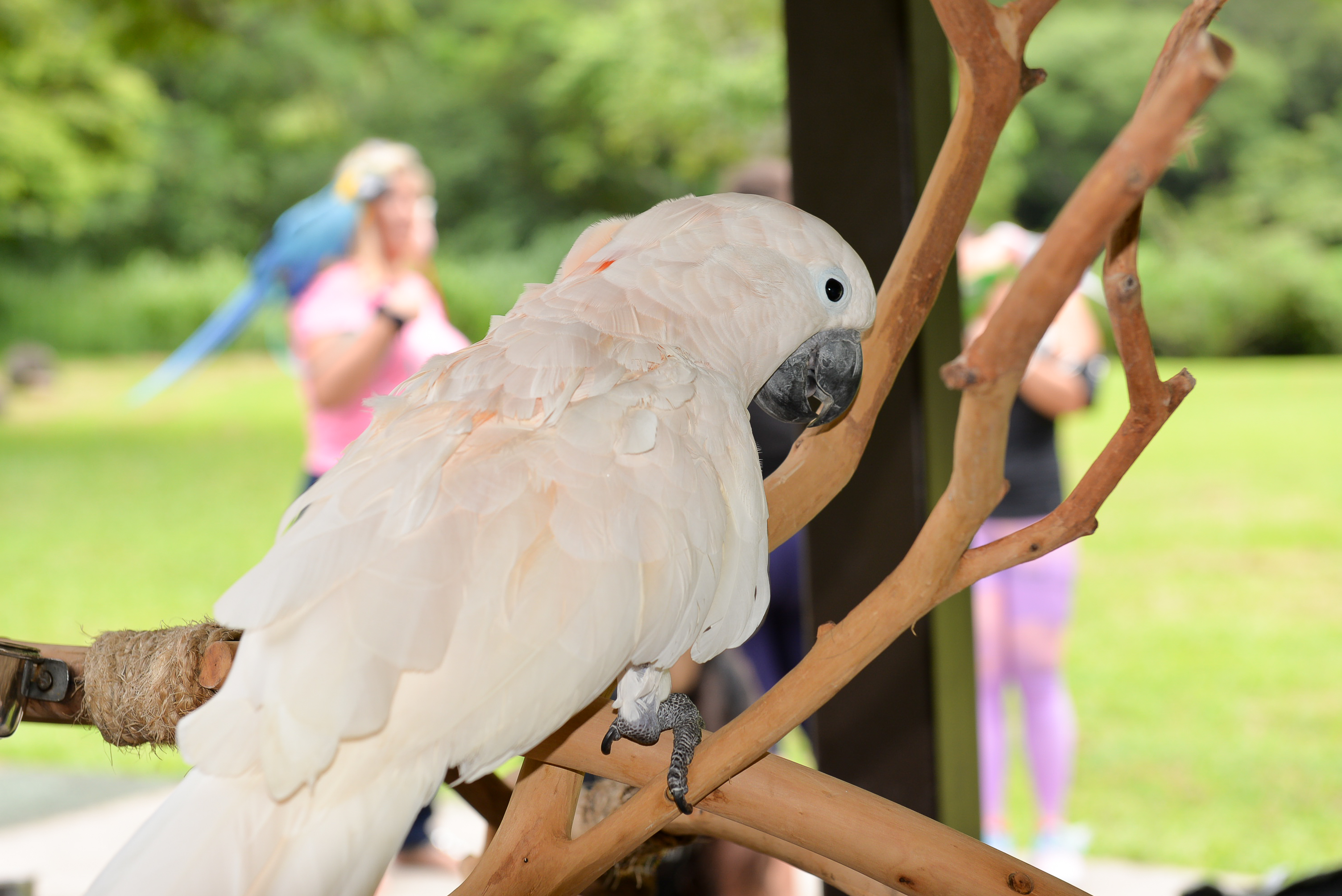
Adopt a Bird Finding the right match — for the bird, and for you
HFFN’s adoption process is built around relationships — yours with our community, and the bird’s with you. We take the time to get it right, because when the match is right, it lasts a lifetime.
A Process Built Around the Bird
Our adoption process is built around the bird, not the request. Rather than matching people to a species, we match birds to the right homes — based on each bird’s individual needs, history, and personality. This takes time, and it means the match we find for you may surprise you. It also means it tends to last.
HFFN is not a shelter with birds waiting on shelves. We are a community of experienced bird people who take every placement seriously — because the birds in our care have often already been through significant change, and they deserve a home we’re genuinely confident in.
If you’re willing to let the process unfold at the bird’s pace rather than your own, you are exactly the kind of person we love hearing from. Come to a meeting, spend time with our community and our birds, and let us get to know you. That’s where every great adoption starts.
Every Bird Has a Story Worth Knowing
Every bird that comes to us carries a history. Some have known deep love and lost it through no fault of their own — an owner who became ill, a family that had to move, a circumstance nobody could have predicted. Others have never known consistent care and are learning, slowly and carefully, what it means to trust. We are honest about all of it — because the right adopter doesn’t just accept a bird’s history. They embrace it.
The bird who needs patience, the bird who needs experience, the bird with a colorful vocabulary — these are not problems to be managed. They are personalities to be understood.
Preference Birds
Some birds have formed deep, specific bonds — with women, with men, or with a particular kind of energy. These preferences are real and meaningful, and honoring them is part of finding the right match. A bird placed with someone who fits their world is a bird that thrives.
Boundary Testers
A bird that hasn’t been handled consistently will test new people — it’s how they make sense of an unfamiliar situation. They’re not being difficult; they’re being smart. In experienced, patient hands, these birds often become the most deeply bonded companions imaginable.
Expressive Vocabularies
Parrots are mirrors of the households they came from. Some of our birds have developed vocabularies that reflect lives very different from the one ahead of them. This is part of who they are — and for the right person, it’s one of the things that makes them unforgettable.
Retired Breeders
Our retired breeder birds have lived their lives in aviary settings and are happiest continuing to do so. They need space, enrichment, and a guardian who finds joy in watching birds be birds — rather than expecting a hands-on companion relationship. For the right keeper, they are a privilege to care for.
How It Works — With Honesty and Aloha
The bird chooses. We just try to make sure both sides are truly ready for what that means.
Thinking About the Long Arc
Parrots and cockatoos live for decades. A bird placed today may still be in that home twenty, thirty, or forty years from now. We think about the whole arc of a placement — not just the moment of adoption. A thoughtful conversation about life circumstances isn’t a judgment. It’s us doing our job for the bird and for you.
Life Stage & Stability
The more settled your circumstances — housing, relationships, career, finances — the more confidently we can envision a long-term placement. This isn’t a disqualifier for anyone in a season of change; it’s simply something we talk about openly, together.
Children in the Home
Some birds are wonderful with children; others are not, and no amount of supervision changes that. We think carefully about the ages of any children in the household when identifying a potential match, and we’ll be straightforward with you about whether a specific bird is a good fit for your family.
Financial Readiness
Quality care — food, housing, enrichment, and veterinary attention — has real costs. Avian vets in Hawaiʻi are limited and specialist care can be significant. We’re not asking for a financial statement; we’re asking that you’ve thought about this honestly and feel genuinely prepared.
Homeowner vs. Renter
Parrots are enthusiastic chewers, and Hawaiʻi landlords are notoriously cautious about pets. A bird caught in a lease violation can face a rushed, traumatic rehoming. If you rent, we ask for written landlord permission before any placement — not to create obstacles, but to protect the bird from exactly this kind of disruption.
If you rent your home, we ask that your landlord confirm in writing that birds are welcome on the property before we finalize a placement. This is one of the most important protections we can offer a bird in our care. We have seen too many heartbreaking surrenders caused by unexpected tenancy issues — getting this in writing before placement protects everyone, especially the bird.
The Changing Landscape of Emotional Support Animals
Some of our members have relied on Emotional Support Animal (ESA) designations to keep their birds in rentals that would otherwise prohibit pets. We want to be transparent with you: the federal protections that made that possible have changed significantly, and we believe every member and prospective adopter deserves to understand what has happened.
For years, HUD guidance required landlords to make reasonable accommodations for tenants with ESAs — even in no-pet buildings — under the Fair Housing Act. That guidance shielded many renters, including bird owners, from eviction or denial of housing based solely on a no-pet policy. Two things have now changed that picture substantially:
- Sept 17, 2025 HUD quietly withdrew its 2013 and 2020 guidance documents on assistance animals entirely — removing the regulatory framework that landlords and tenants had been relying on for over a decade.
- May 22, 2026 HUD issued new enforcement guidance. Federal protection from pet policies is now effectively limited to trained service animals. Emotional Support Animals were removed from the category of animals that housing providers are presumed required to accommodate, and ESA-related complaints are far less likely to be investigated or pursued.
Hawaiʻi is particularly exposed. Unlike some states, Hawaiʻi has no state-level law independently protecting emotional support animals in housing. If you have been relying on an ESA designation to keep your bird in a no-pet rental, we strongly encourage you to consult with a housing attorney familiar with Hawaiʻi law before making any adoption decisions.
This section is provided for informational purposes only and does not constitute legal advice. Please consult a qualified attorney for guidance specific to your situation.
Ready to Begin?
If you’ve read everything above and you’re still with us — wonderful. That’s exactly the spirit we’re looking for. The best first step is simply to come to a meeting. No paperwork required for that — just show up, meet the birds and the people, and let us get to know you.
We also ask all prospective adopters to complete a written application. It’s not a test with right and wrong answers — it’s a way for us to understand your background, your situation, and your honest expectations, so we can have better conversations with you from the start.
Download the Adoption Application
Complete it at your own pace and bring it to a meeting or email it to us. We’ll follow up to start a conversation.
Veterinary Referrals & Neighbor Island Adopters
Veterinary referrals: When a trusted avian veterinarian reaches out on behalf of a client who has lost a bird and is looking to welcome another, we take that recommendation seriously. A vet who has watched someone care for a bird over years has seen things we never could in a few meetings. We make every effort to work with vet-referred prospective adopters.
Neighbor islands: Living on Maui, Hawaiʻi Island, Kauaʻi, or Molokaʻi doesn’t disqualify you — it simply changes how the process works. We have trusted contacts across the outer islands who can conduct in-person home visits and interviews on our behalf. Distance doesn’t replace the process; it adapts it.
Neighbor Island Inquiries Welcome
If you’re on a neighbor island and believe you can offer a wonderful home to a bird in need, please reach out. Tell us about your experience, your living situation, and what draws you to adoption. We’ll go from there.
Is HFFN Adoption the Right Path for You?
Adopting through HFFN is not the fastest route to bringing a bird home — and that’s intentional. If speed or a specific species is the priority, a reputable breeder may genuinely be the better fit, and we mean that without judgment. We would rather you find the right bird through the right channel than rush into an adoption that doesn’t serve the animal.
HFFN adoption is the right path if you’re drawn to the idea of giving a bird a second chance. If you’re willing to meet a bird where it is rather than where you imagined it would be. If you value community, experience, and relationship over transaction. If you understand that the process has a pace of its own — and you find that meaningful rather than frustrating.
If that sounds like you, download the application, come to a meeting, and say hello. We will take it from there with aloha. 🌺