Hawaiian Feathered Friends Network
Hawaiʻi’s Premier Parrot Rescue · Education · Community Support · Parrot Club Organization
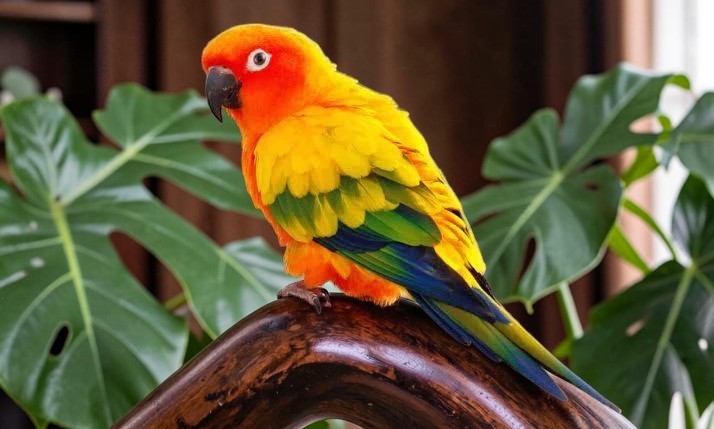
ConurePersonality Without Limits
Playful, loud, affectionate, and irresistibly charming — conures pack an enormous personality into a compact body. From the quiet cuddliness of the Green Cheek to the full-volume spectacle of the Sun Conure, there is a conure for almost every household. Almost.
What Is a Conure?
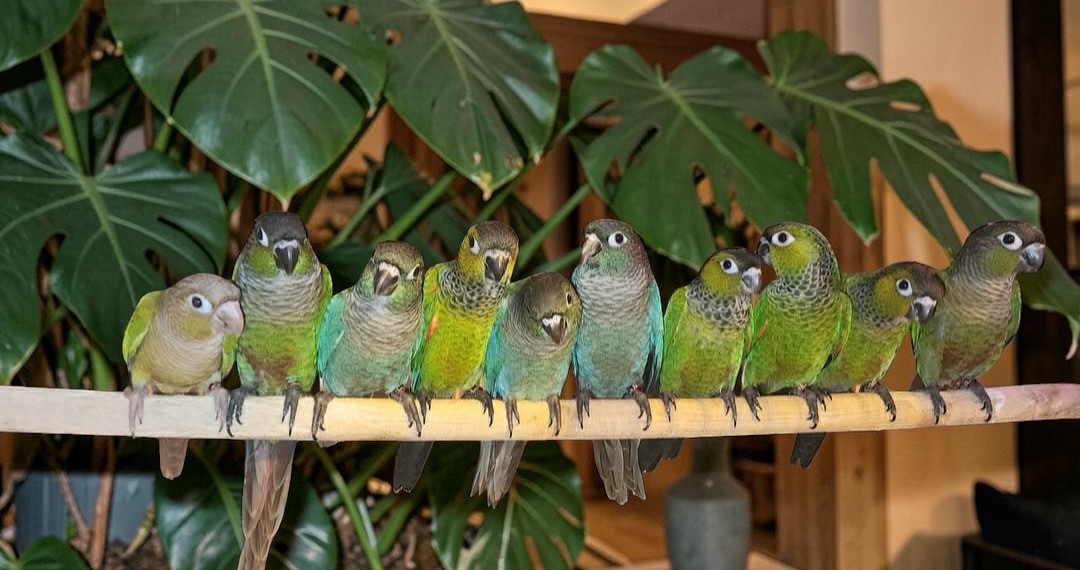
Green Cheek and Black Cap Conures together · Photo courtesy of Casey Baker, Hawaiʻi Parrot Forum
“Conure” is a common name rather than a formal taxonomic category — it refers broadly to a diverse group of small to medium-sized New World parrots found across Mexico, Central America, and South America. They are distributed across several genera including Aratinga, Pyrrhura, Psittacara, and others, and collectively comprise dozens of species with an enormous range of size, color, temperament, and noise level.
What unites conures as a group is a broadly shared personality profile: they are active, social, playful, and demonstratively affectionate. They love to be in the middle of whatever is happening in their household. They enjoy cuddling, burrowing under clothing, playing in pockets, and generally inserting themselves into their person’s life with cheerful persistence. They are not birds that are content to sit on a perch and observe — they want to participate.
The HFFN community keeps a remarkable variety of conure species — from the widely beloved Green Cheek with its extraordinary range of color mutations, to the visually spectacular Sun Conure and its Red Factor mutation developed right here in the islands, to the bold Cherry-headed and Jenday, and the quiet, cuddly Black Cap. This page covers the species and varieties most commonly seen in our community.
A conure does not understand the concept of personal space. This is either their greatest charm or their most significant drawback, depending entirely on your personality.
Sun Conure & Red Factor Sun Conure
Sun Conure
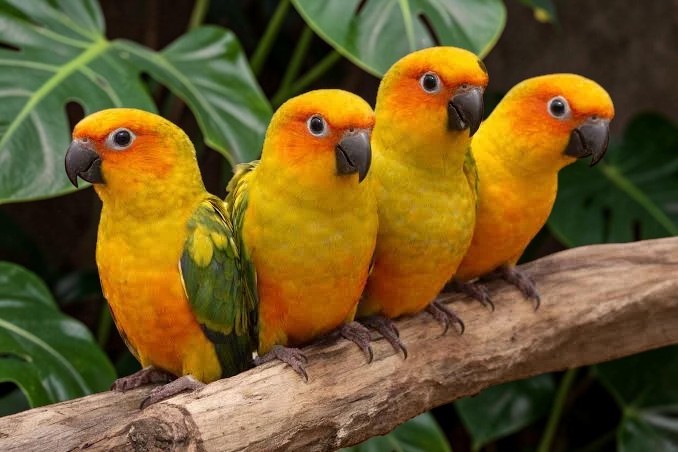
Sun Conures — HFFN member birds
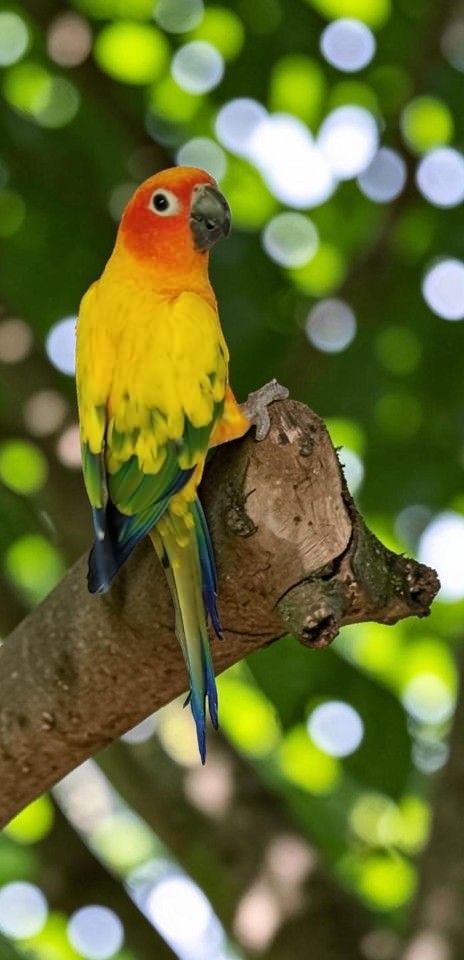
A Sun Conure in full color — HFFN member photo
The Sun Conure is one of the most visually spectacular parrots in aviculture — a medium-sized conure (about 30 cm) with brilliant orange-yellow plumage that intensifies with age, accented by green and blue flight feathers and a distinctive white eye ring. Adult birds in full color are genuinely breathtaking. They are also among the loudest birds in the conure family — their contact call is piercing, carries extraordinary distances, and is produced with enthusiasm and frequency. A Sun Conure in full voice is not something neighbors will fail to notice.
Personality-wise, Sun Conures are bold, playful, and intensely affectionate. They crave physical contact and will actively seek out their person for cuddling, preening, and burrowing under clothing. They are not subtle birds in any dimension — their emotions are expressed loudly and physically at all times. For the household that loves an expressive, engaging, visually magnificent bird and can manage the noise level, a Sun Conure is extraordinary. For apartment dwellers or noise-sensitive households, they may not be the right fit.
The Sun Conure is listed as Endangered in the wild, primarily due to habitat loss and past trapping for the pet trade. All Sun Conures in the United States are captive-bred. HFFN has a number of members who keep and breed Sun Conures in Hawaiʻi, and the species is well represented in our community.
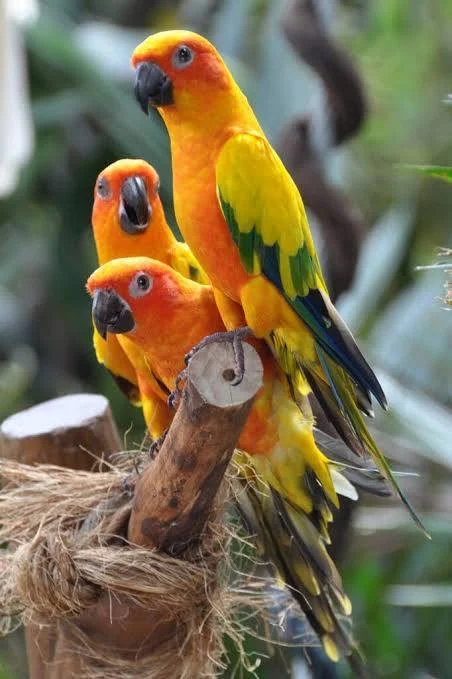
Sun Conures — HFFN member photo
HFFN member’s Sun Conure · Oʻahu
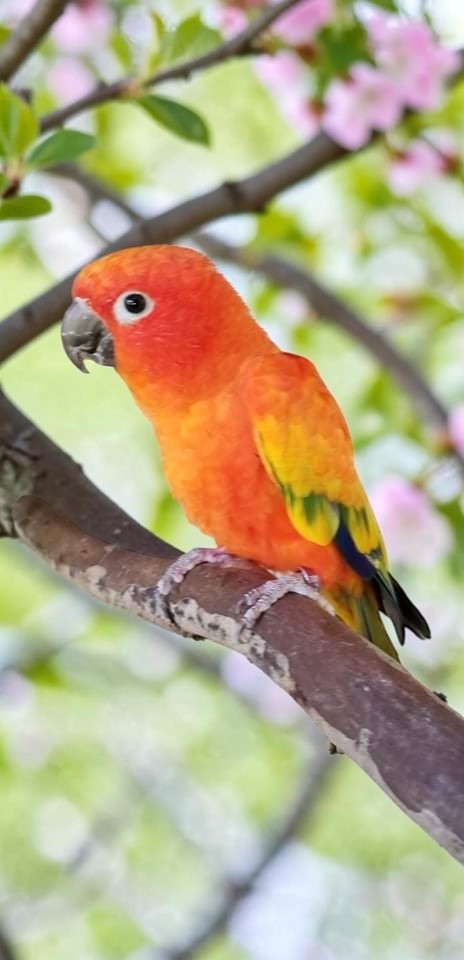
Red Factor Sun Conure
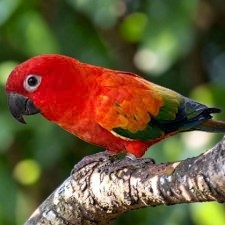
Red Factor Sun Conure — deeper, richer red-orange throughout
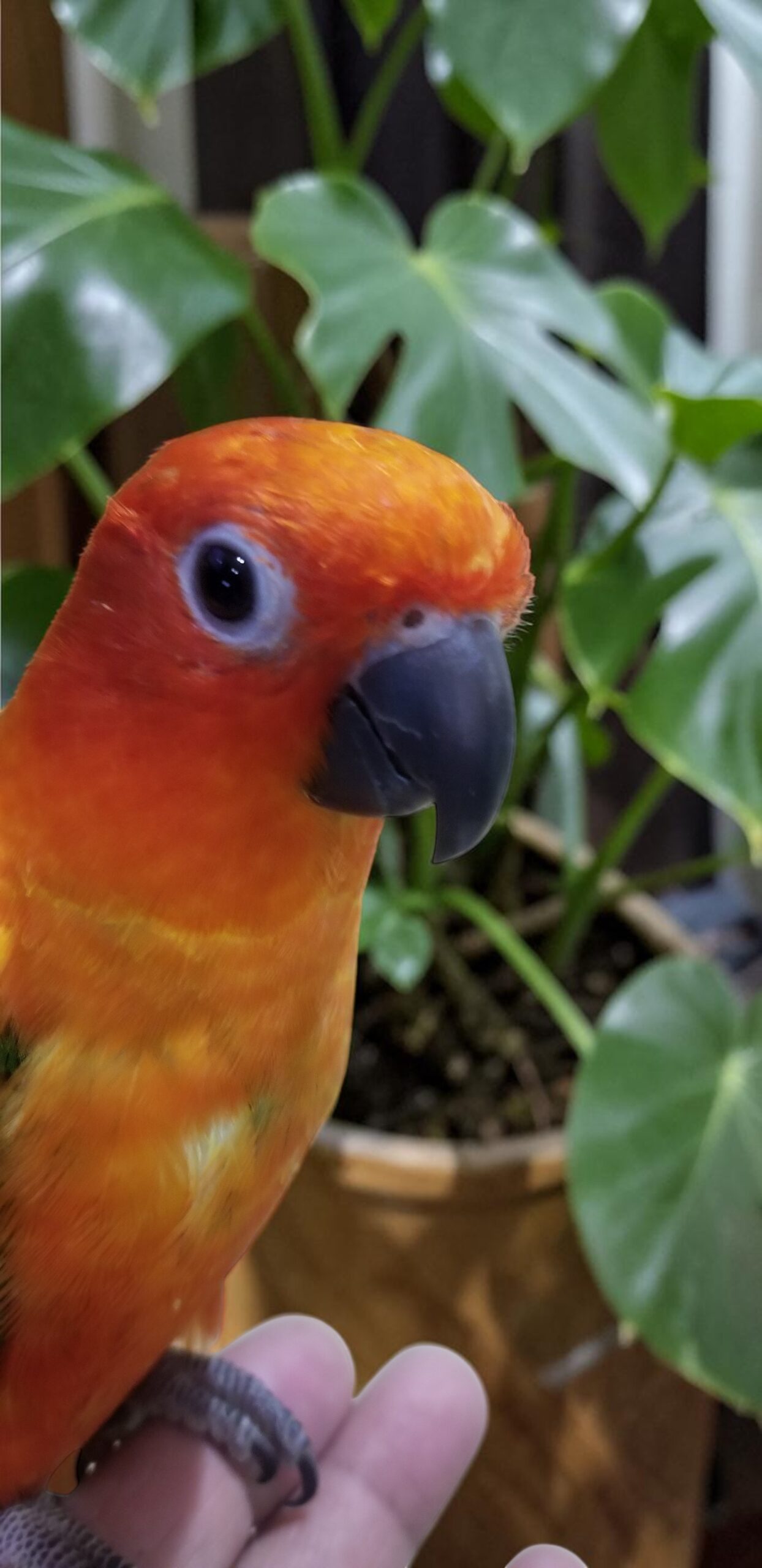
The Red Factor mutation intensifies the orange-red pigmentation significantly
The Red Factor Sun Conure is a selectively bred color mutation of the standard Sun Conure — not a separate species, but a bird bred specifically for enhanced red-orange pigmentation that goes beyond what normal Sun Conures display. Where a standard Sun Conure is brilliant orange-yellow, a Red Factor is deeper, richer, and more intensely red-orange throughout — particularly on the face, breast, and abdomen. The green and blue flight feathers are typically reduced or absent in high-expression individuals.
The Red Factor mutation has been developed and refined by dedicated breeders in Hawaiʻi, and our islands are home to some of the finest Red Factor Sun Conure breeding programs in the country. The photographs on this page represent some of the exceptional birds produced and owned by our community.
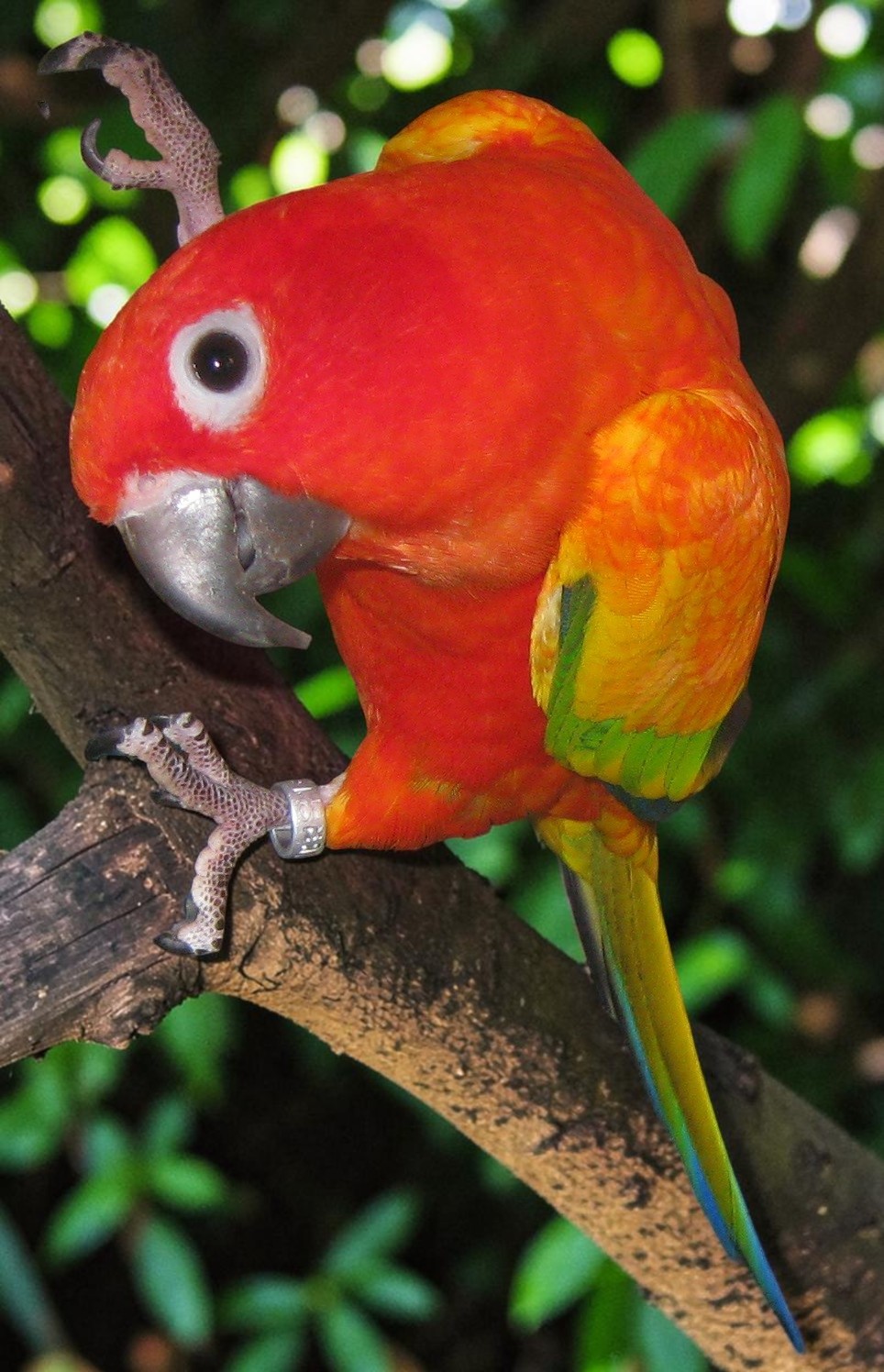
HFFN member’s Red Factor · Oʻahu
HFFN member’s Red Factor · Oʻahu
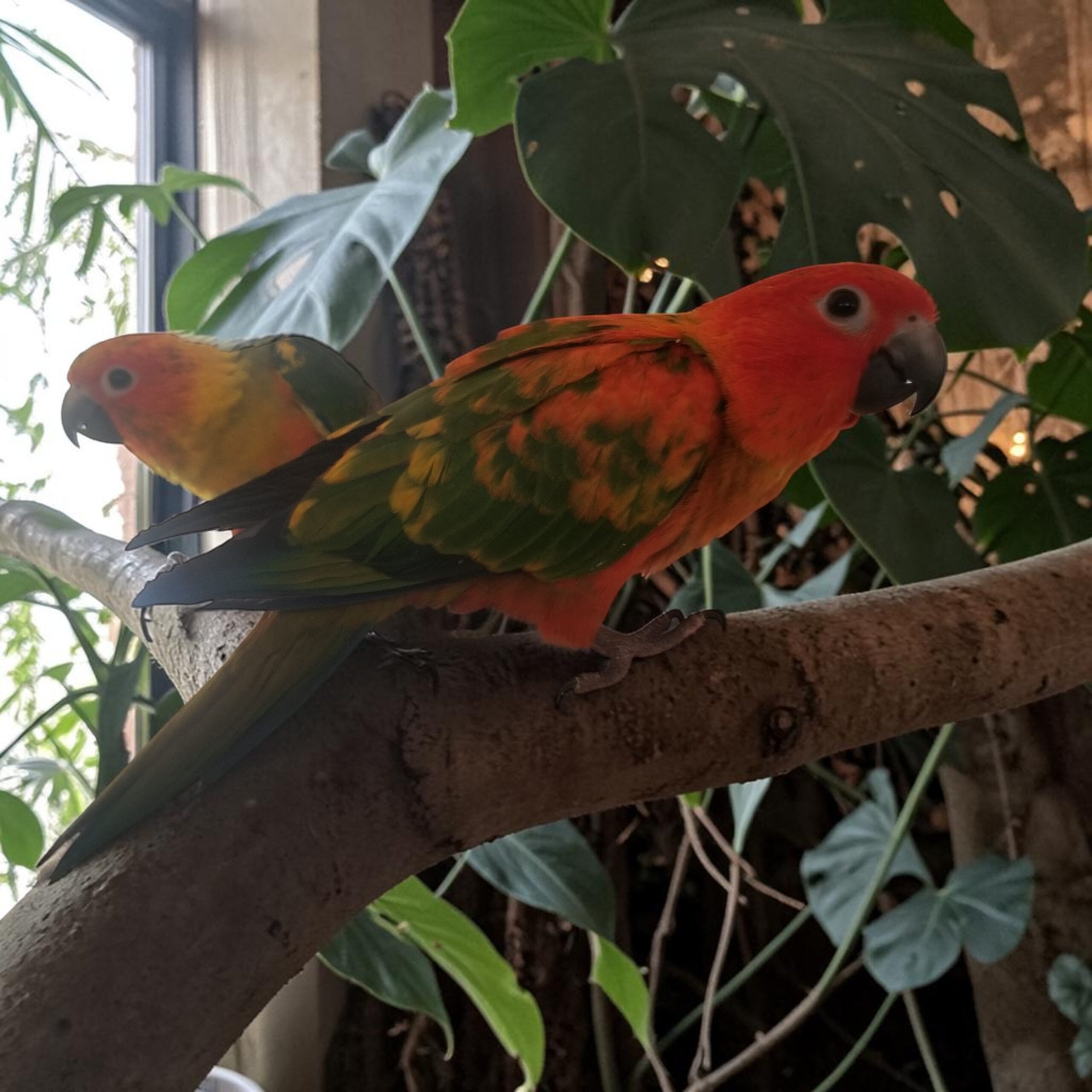
Red Factor alongside a normal Sun Conure — the difference is striking
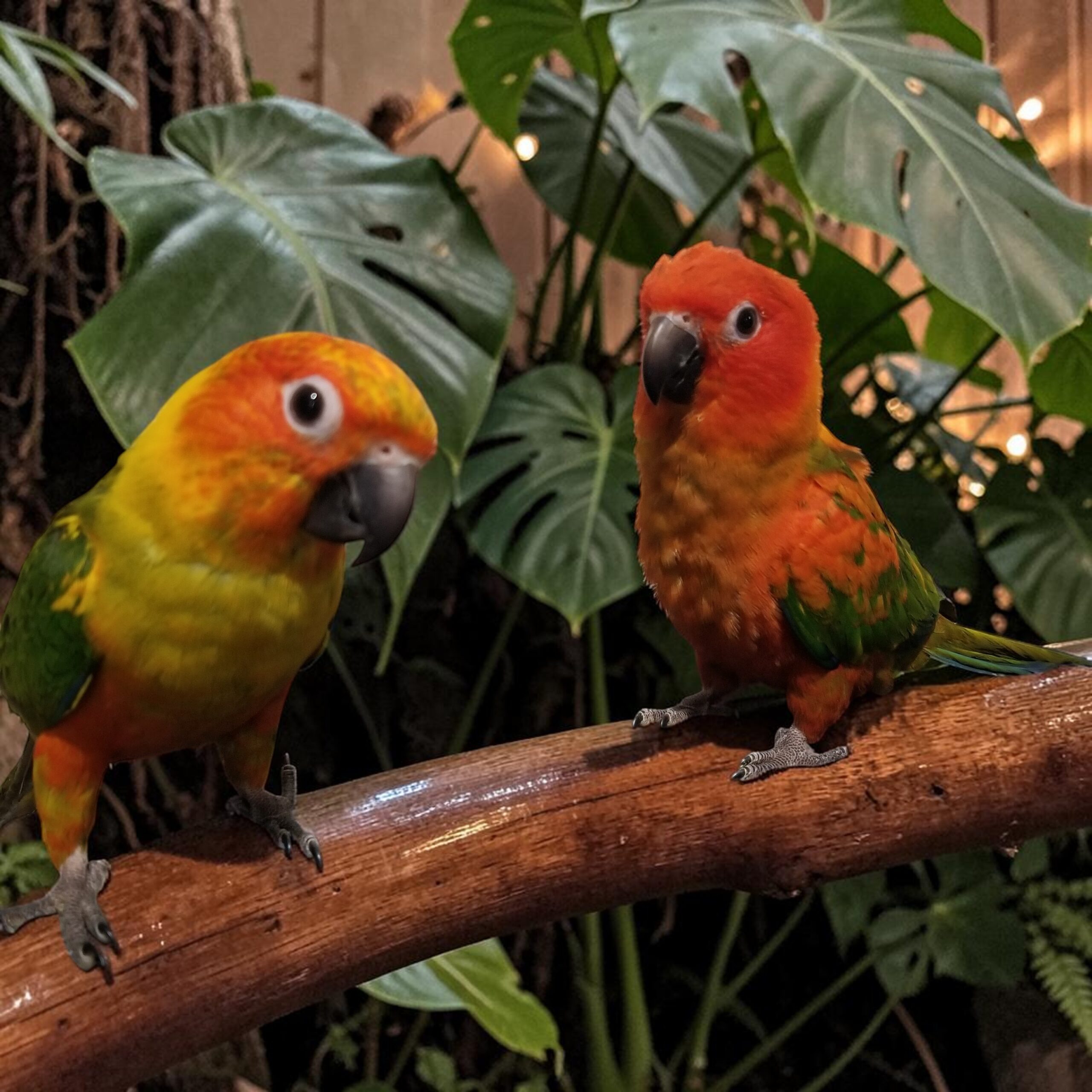
Red Factor and normal Sun Conure chicks — HFFN member breeding program
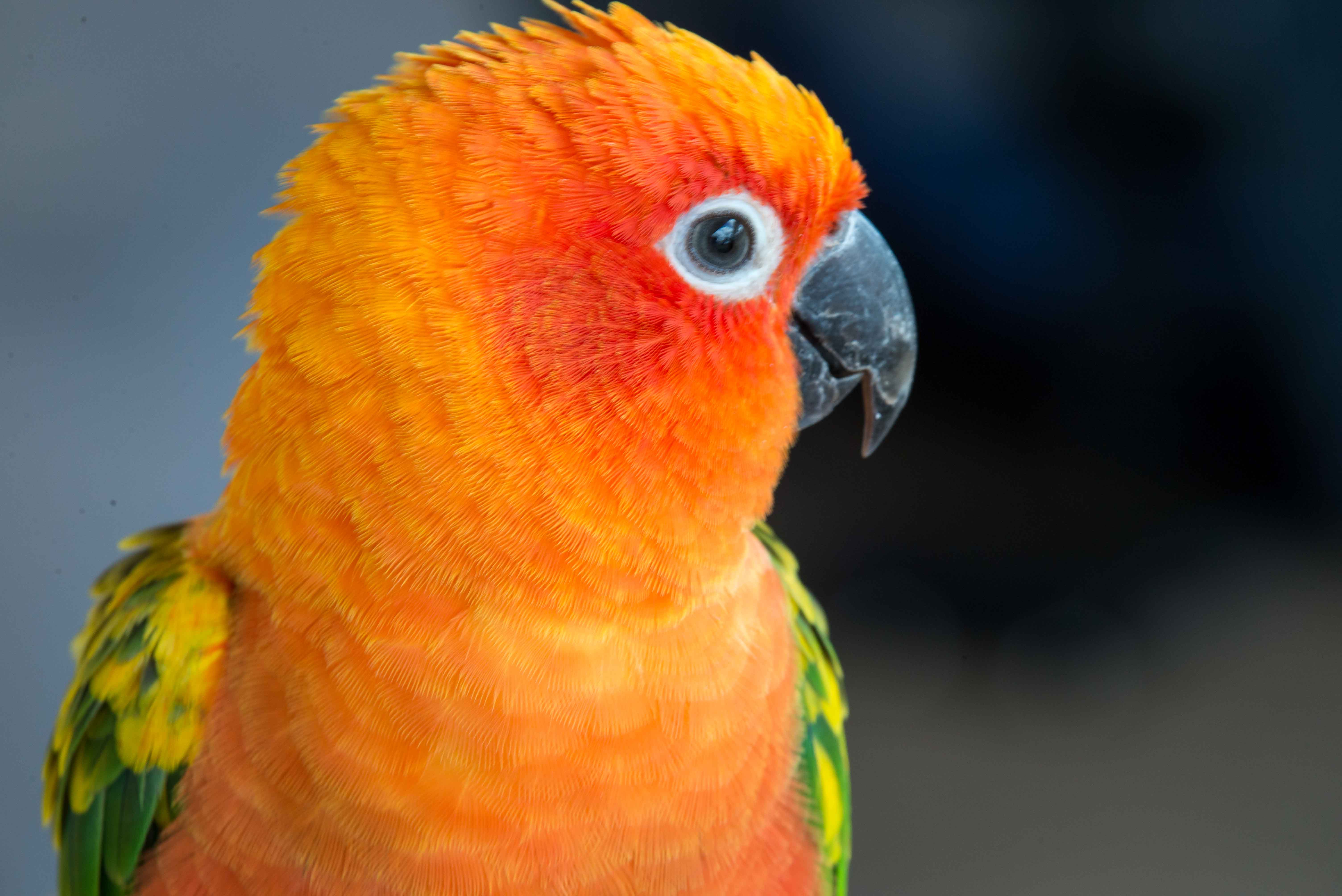
HFFN member’s Birds · Oʻahu
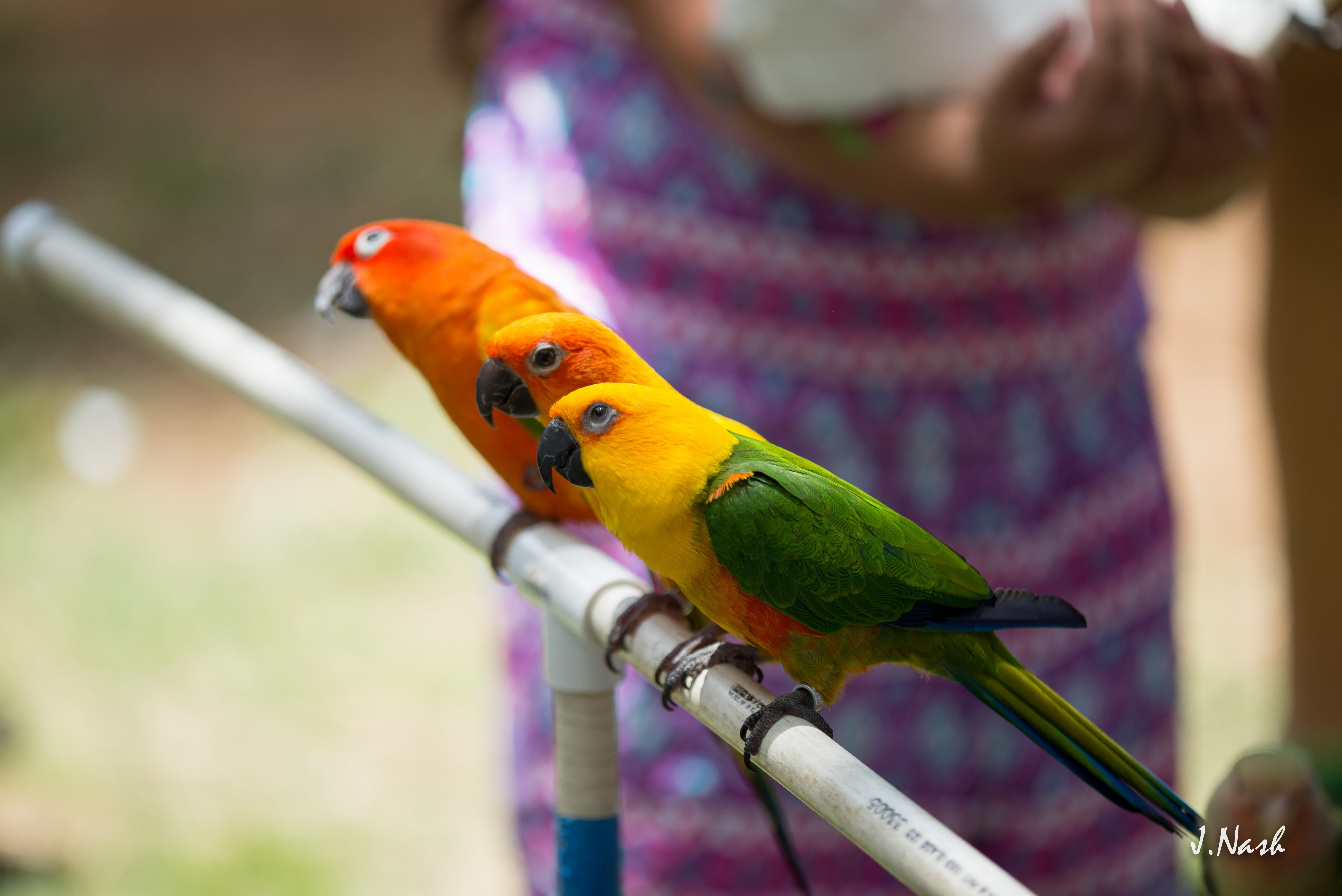
HFFN member’s Red Factor with a Jenday and a normal Sun Conure · Oʻahu
A Mutation Developed in Hawaiʻi
The Red Factor Sun Conure represents genuine avicultural innovation by Hawaiʻi’s bird-keeping community. The selective breeding programs that produced these birds required years of careful pairing decisions, meticulous record-keeping, and deep knowledge of conure genetics. HFFN is proud to have members at the forefront of this work, and the birds they have produced are recognized as among the finest Red Factor Sun Conures in the United States.
Sunday Conure
Sunday Conure
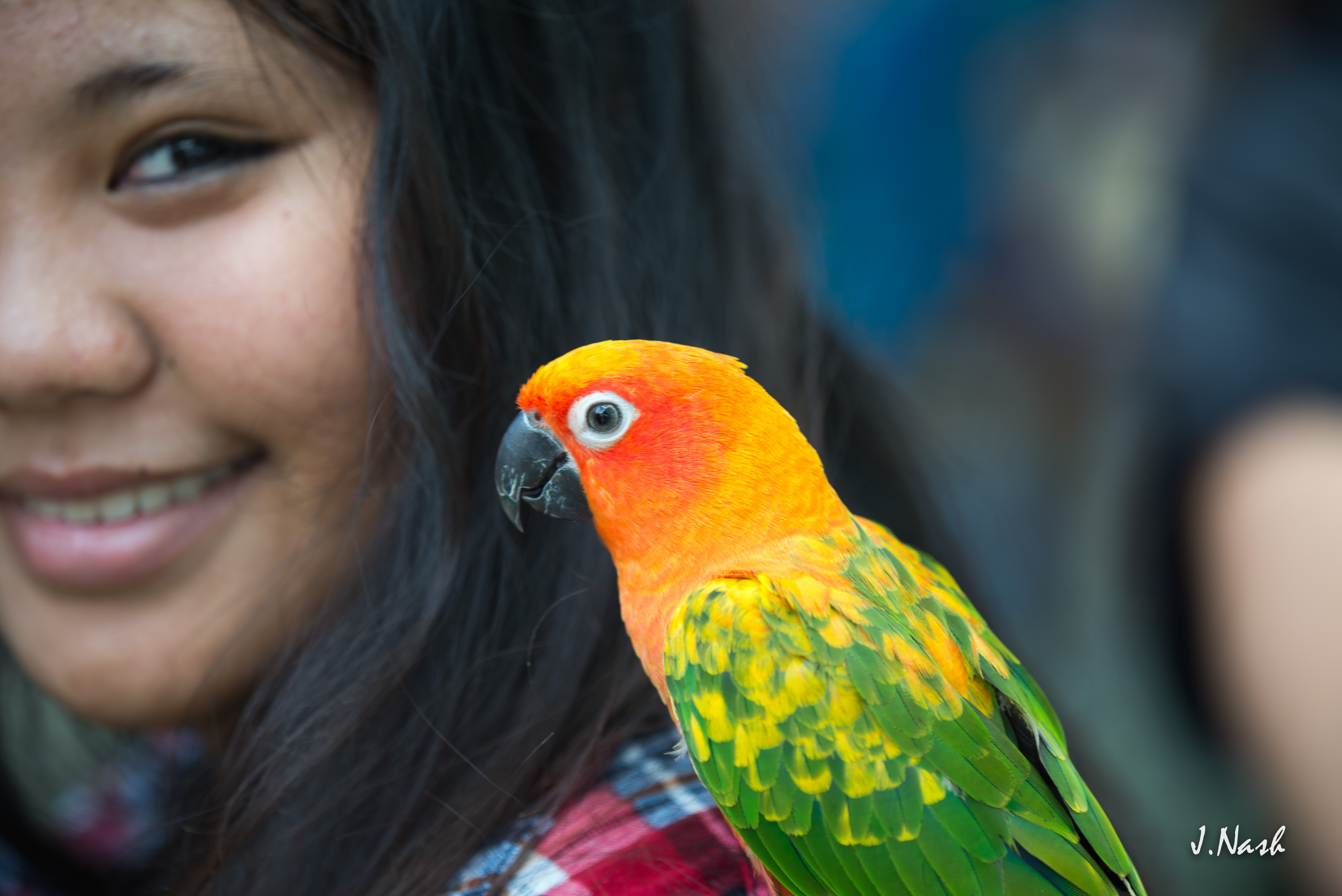
Sunday Conure — the vivid hybrid of Sun and Jenday
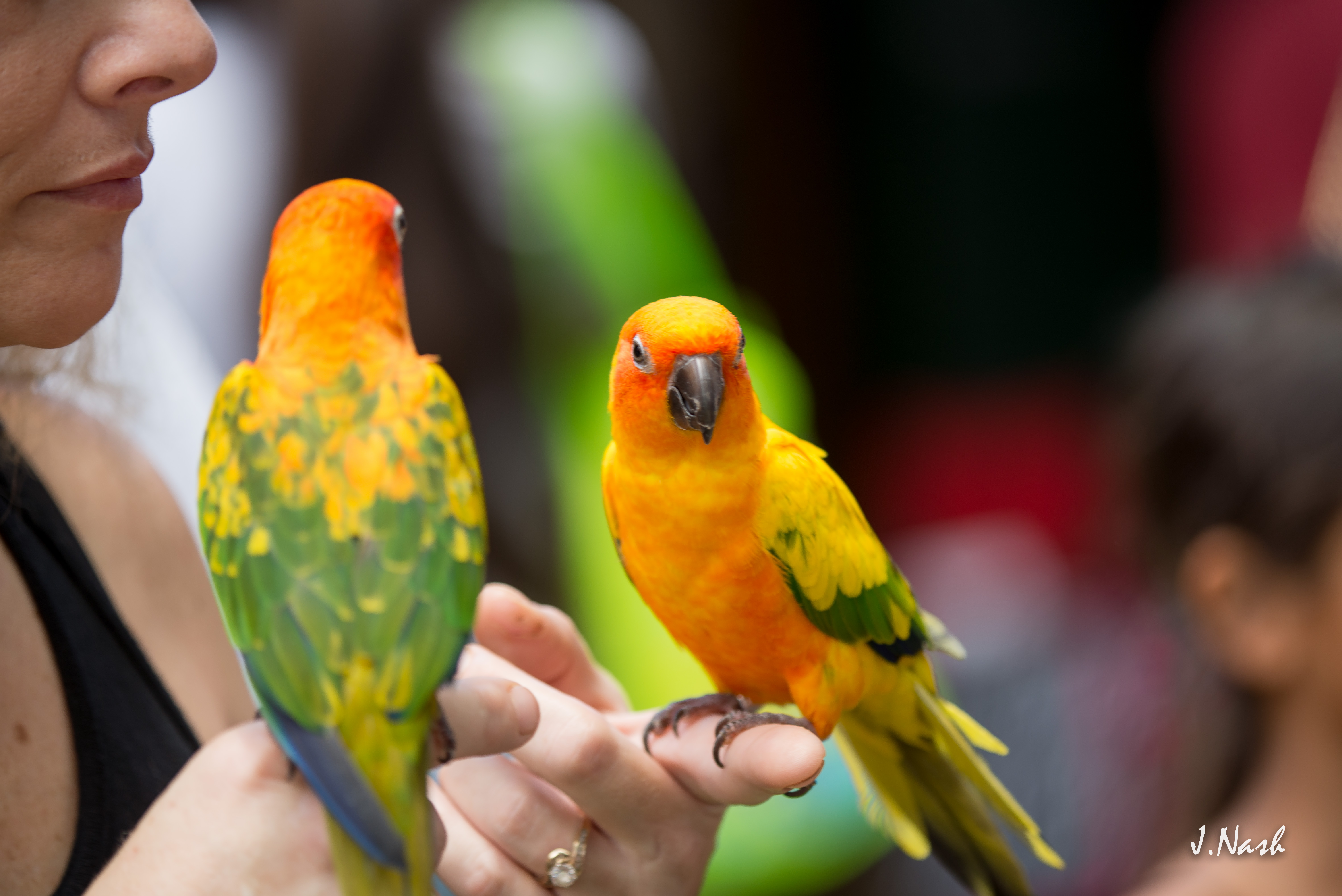
Sunday Conure — blending the color patterns of both parent species
The Sunday Conure is a captive hybrid between a Sun Conure and a Jenday Conure — two closely related Aratinga species that are sometimes considered subspecies of each other by some authorities. The Sunday Conure blends the characteristics of both parents: the vivid orange-yellow of the Sun Conure and the bold green body markings of the Jenday, producing a bird with a distinctive and attractive color pattern that varies between individuals depending on which parent’s traits dominate.
Sunday Conures do not occur in the wild — they are intentionally produced in captivity. In temperament they share the general Aratinga character: loud, playful, affectionate, and physically demonstrative. Like all hybrids, each individual’s personality reflects its own combination of parental traits. Sunday Conures are not as commonly produced as pure Sun or Jenday Conures but are occasionally seen in the HFFN community and are always a conversation starter at our meetings.
Jenday Conure
Jenday Conure
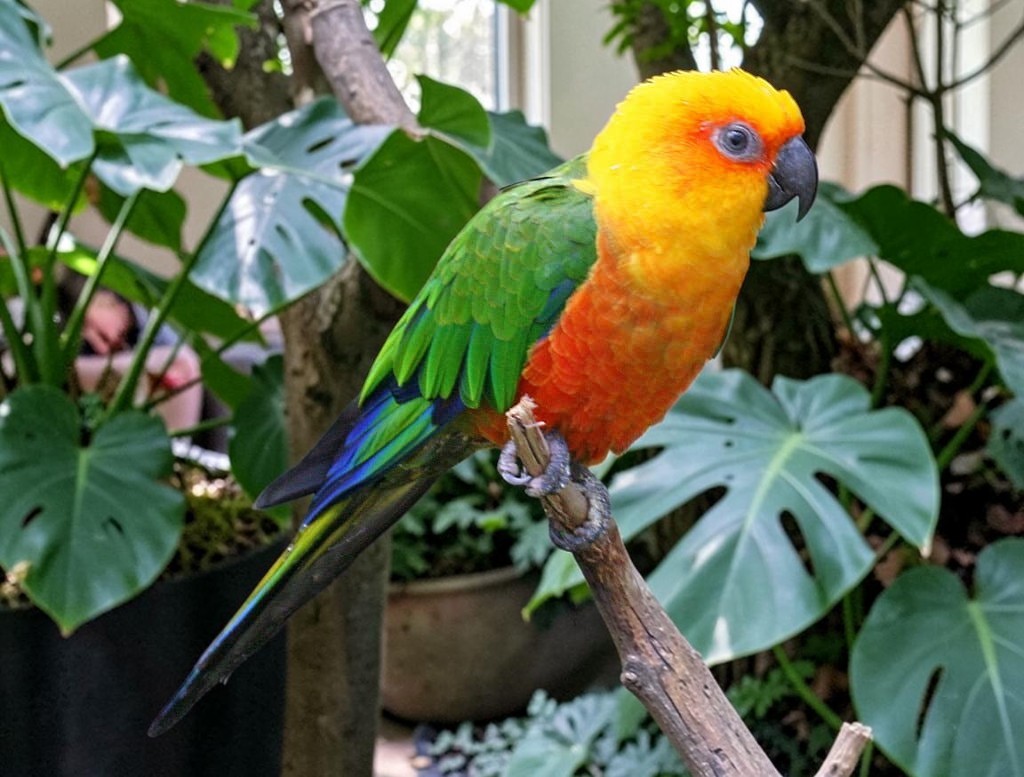
Jenday Conure · HFFN member photo
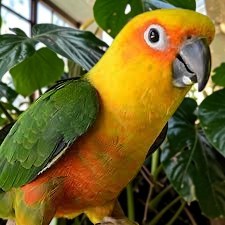
Jenday Conure · HFFN member photo
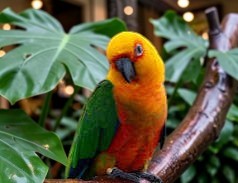
Jenday Conure · HFFN member photo
The Jenday Conure is one of the most striking members of the Aratinga group — a vivid bird with an orange head and breast, bold green back and wings, and blue-tipped flight feathers. It is native to northeastern Brazil, where it inhabits forest edges, palm groves, and agricultural areas. Some authorities treat the Jenday as a subspecies of the Sun Conure rather than a separate species, reflecting their close genetic relationship — a relationship that makes hybrid Sunday Conures possible.
In temperament, Jendays are very similar to Sun Conures — loud, physically affectionate, playful, and bold. They are perhaps slightly more outgoing and less easily startled than Sun Conures, with a reputation for being confident and fearless in their interactions. They are excellent birds for those who want the Aratinga personality and the beautiful orange-and-green coloration, in a bird that is slightly more commonly available than the Sun Conure. Like all loud conures, they require a housing situation where the noise level is acceptable to both the owner and the neighbors.
Cherry-headed (Red-masked) Conure
Cherry-headed Conure
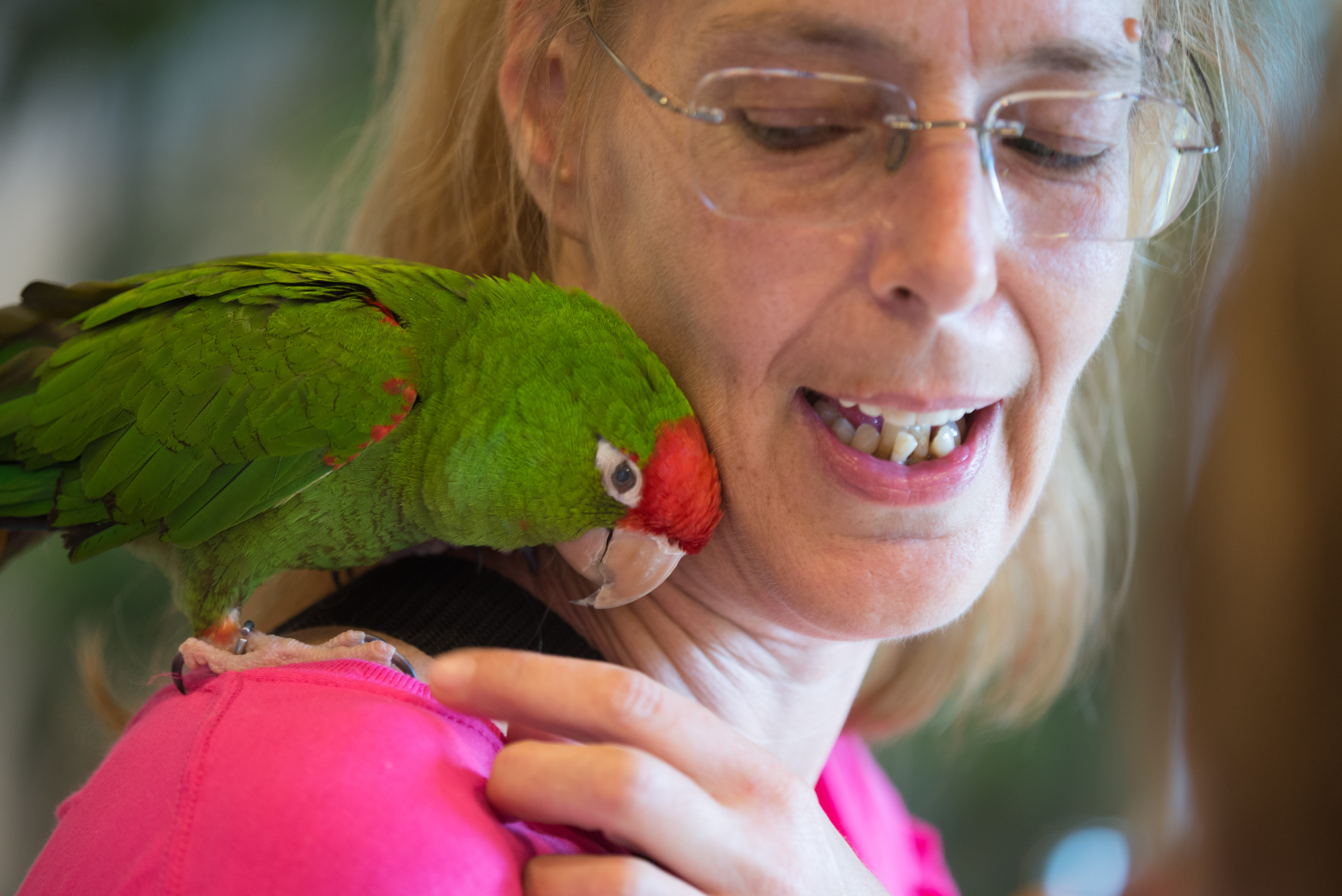
Cherry-headed Conure · HFFN member photo
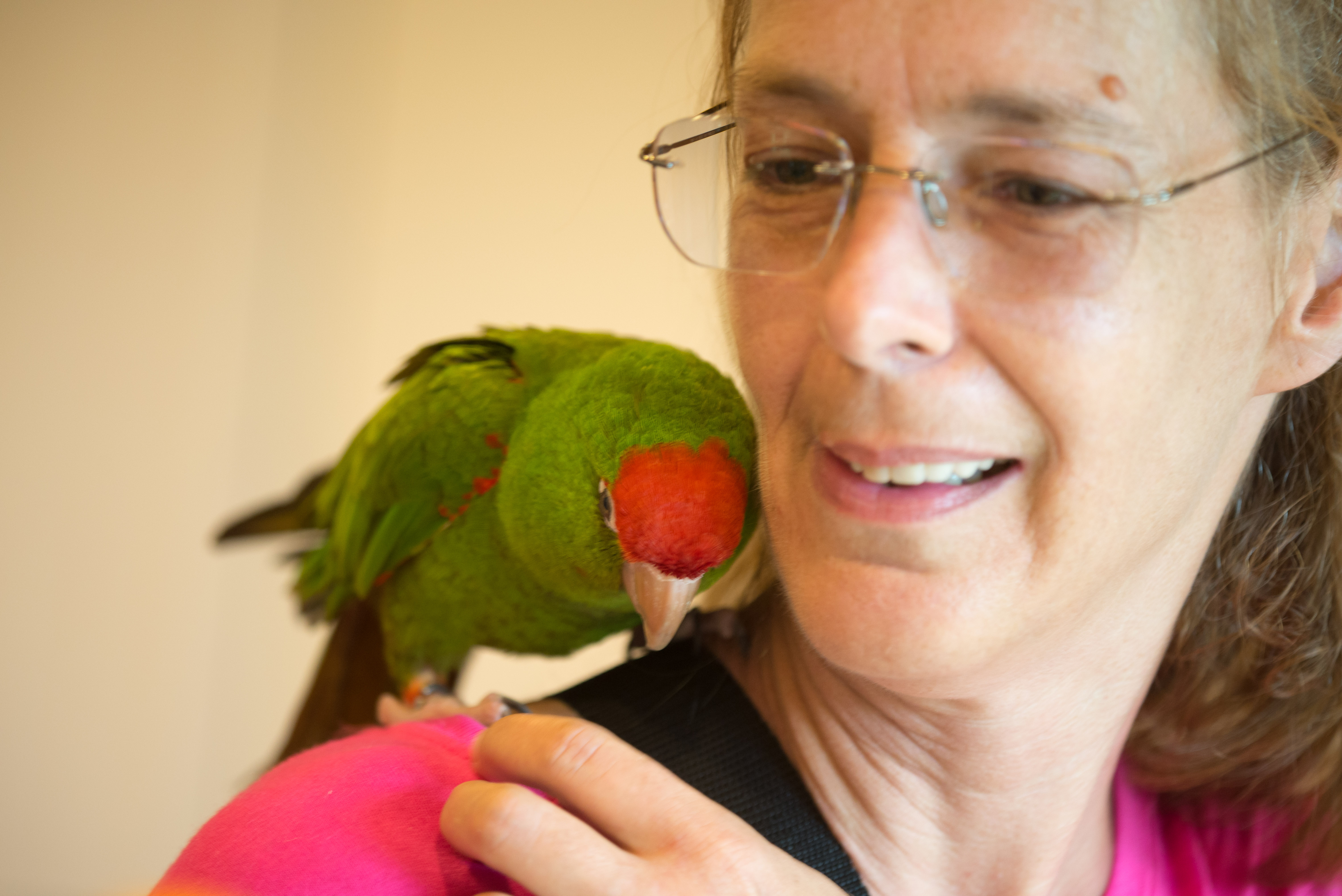
Cherry-headed Conure · HFFN member photo
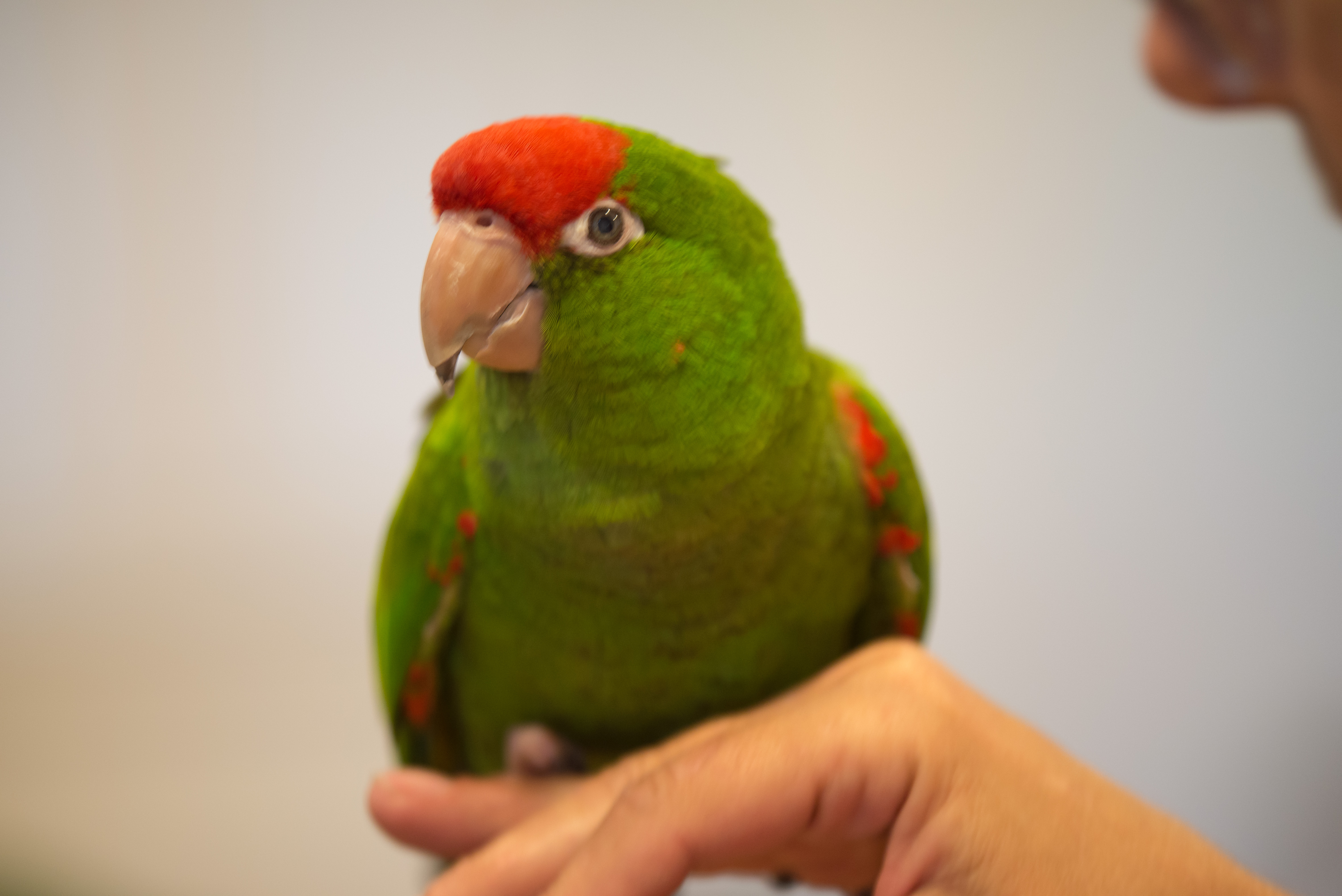
Cherry-headed Conure · HFFN member photo
The Cherry-headed Conure — also known as the Red-masked Parakeet — is a medium-sized, predominantly green conure with a vivid red mask covering the forehead, crown, and cheeks that gives the species its common name. Native to Ecuador and northwestern Peru, it inhabits dry forest and woodland. It is the species made famous by the documentary The Wild Parrots of Telegraph Hill, which followed a flock of Cherry-headed Conures living wild in San Francisco.
In Hawaiʻi, Cherry-headed Conures have established self-sustaining feral populations on Oʻahu (most famously in the Kahala and the Pupukea Paumalu Forest reserve on the North Shore) and on Hawaiʻi Island in the Kona district. These wild populations trace their origins to escaped and released pets and have persisted for decades. See our Wild Parrots of Hawaiʻi page for detailed coverage.
As companion birds, Cherry-headed Conures are intelligent, social, and affectionate — sharing the broad Aratinga personality of bold engagement and physical expressiveness. They can be loud, though perhaps slightly less ear-splitting than Sun Conures at their peak. They are good talkers by conure standards and form strong bonds with their people. Occasionally seen in HFFN rescue when the wild-caught boundary becomes complicated by injured or grounded feral birds — HFFN follows strict protocols in these situations.
Black Cap Conure
Black Cap (Black-headed) Conure
Black Cap Conure — the dark head is the defining field mark
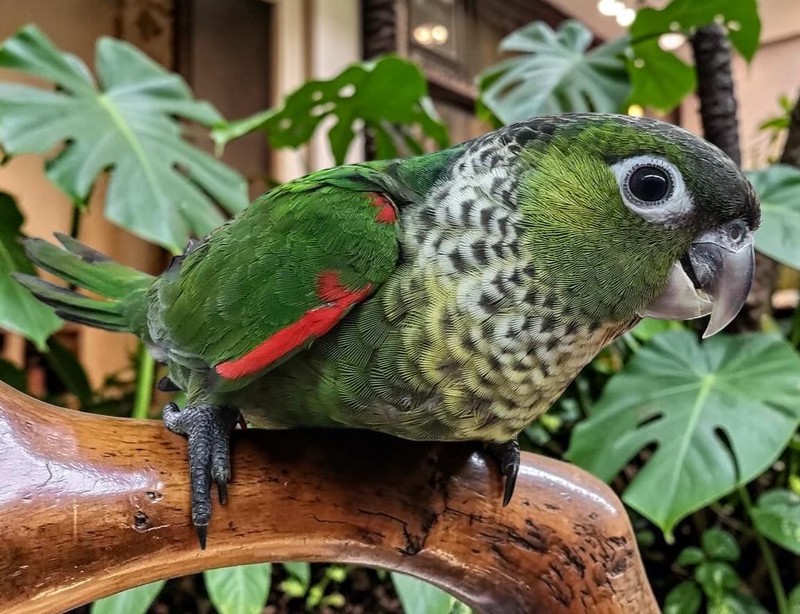
Black Cap Conure · HFFN member photo
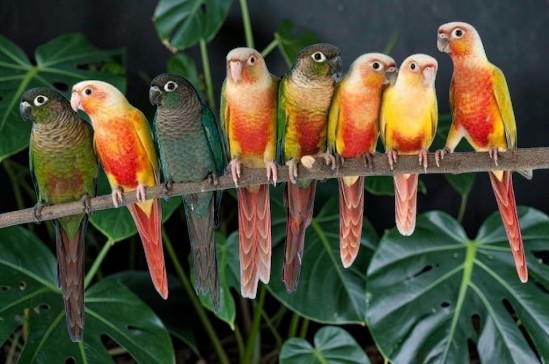
Black Cap alongside Green Cheeks — close in size, different in temperament
Photo courtesy of Casey Baker
The Black Cap Conure is a member of the Pyrrhura genus — the quieter, gentler branch of the conure family — and is one of the most underappreciated small parrots in aviculture. A compact bird of about 25 cm, it has a distinctive dark brown-black head, scalloped green and maroon body feathers, and a long green tail. It is native to Peru, Bolivia, and western Brazil, where it inhabits humid lowland forest.
Pyrrhura conures as a group are significantly quieter than Aratinga species like the Sun or Jenday — their calls are less piercing, less frequent, and considerably more apartment-compatible. The Black Cap specifically is known for being gentle, cuddly, and affectionate without the intense, sometimes overwhelming energy of the louder conures. They love to burrow and cuddle and form strong bonds with their people without being as demanding of constant attention.
Black Caps are less commonly available in Hawaiʻi than Green Cheeks but are occasionally seen in the HFFN community. For someone drawn to the Pyrrhura family but wanting something slightly different from the omnipresent Green Cheek, the Black Cap is an excellent choice.
Green Cheek Conure & Its Mutations
Green Cheek Conure
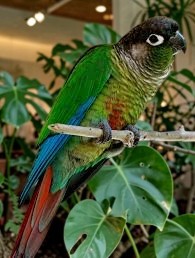
Normal Green Cheek Conure — the wild-type coloration
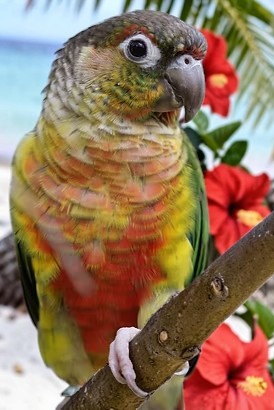
Yellow-Sided mutation — one of the most common GCC color variants
The Green Cheek Conure is the most widely kept Pyrrhura species and one of the most popular small parrots in aviculture worldwide — and within the HFFN community, it is far and away the most commonly seen conure. The normal (wild-type) Green Cheek is predominantly green with a maroon tail, dark brown-black head, grey scalloped chest markings, and the bright green cheek patches that give the species its name. But what has truly elevated the Green Cheek to its current popularity is the extraordinary range of color mutations that breeders have developed — mutations that have produced some of the most vivid and spectacular small parrots in aviculture.
As companion birds, Green Cheek Conures are cuddly, playful, mischievous, and deeply affectionate. They have a cheeky, almost comedic personality — they like to hang upside down, wrestle with toys, steal objects of interest, and generally make their presence felt in the most entertaining way possible. They are considerably quieter than Aratinga conures, making them genuinely apartment-compatible in most situations. They are a wonderful first conure and a deeply rewarding long-term companion.
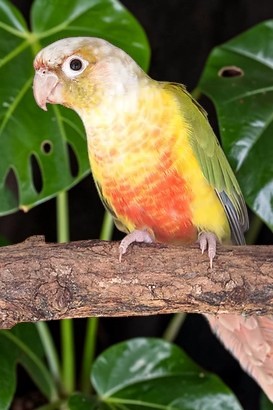
Pineapple mutation — yellow-orange body with red eyes
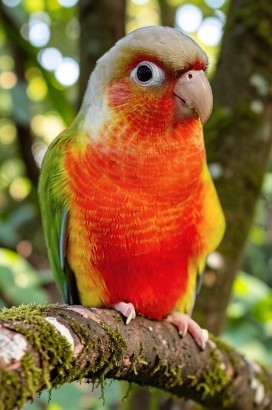
High Red Pineapple — enhanced red expression
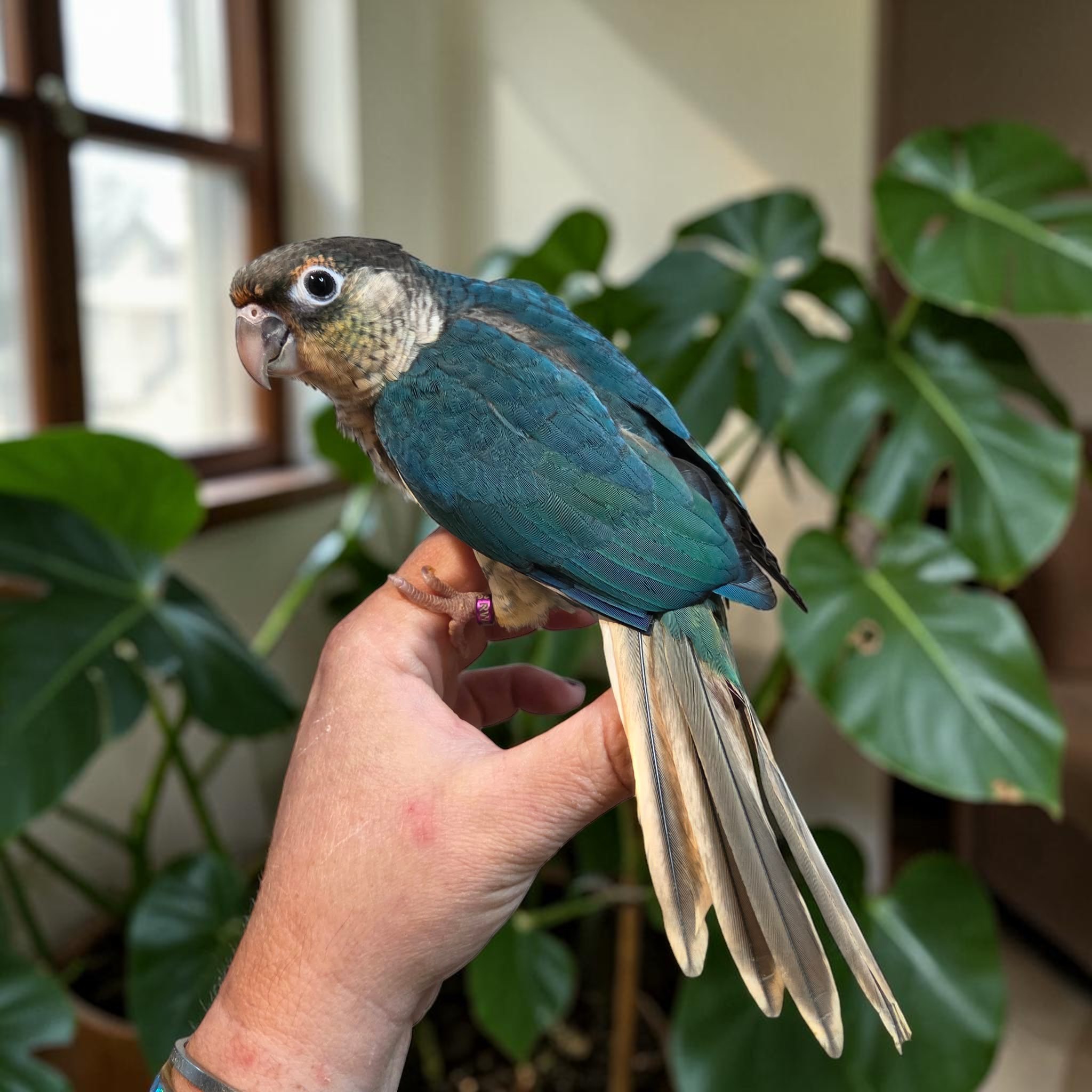
Violet Yellow-Sided Turquoise — multi-gene mutation
The color mutation range in Green Cheek Conures is among the most extensive of any small parrot species. The major mutations include Yellow-Sided (replacing the dark body with bright yellow sides and red undertail), Cinnamon (warm brown replacing the dark pigment throughout), Pineapple (a combination producing vivid yellow-orange coloration), Turquoise (replacing green with blue-green), Violet (adding a purple suffusion), and many combinations of these base mutations. Multi-gene mutations like Violet Yellow-Sided Turquoise produce some of the most extraordinary coloration in small aviculture.
Green Cheek Mutations in Hawaiʻi:
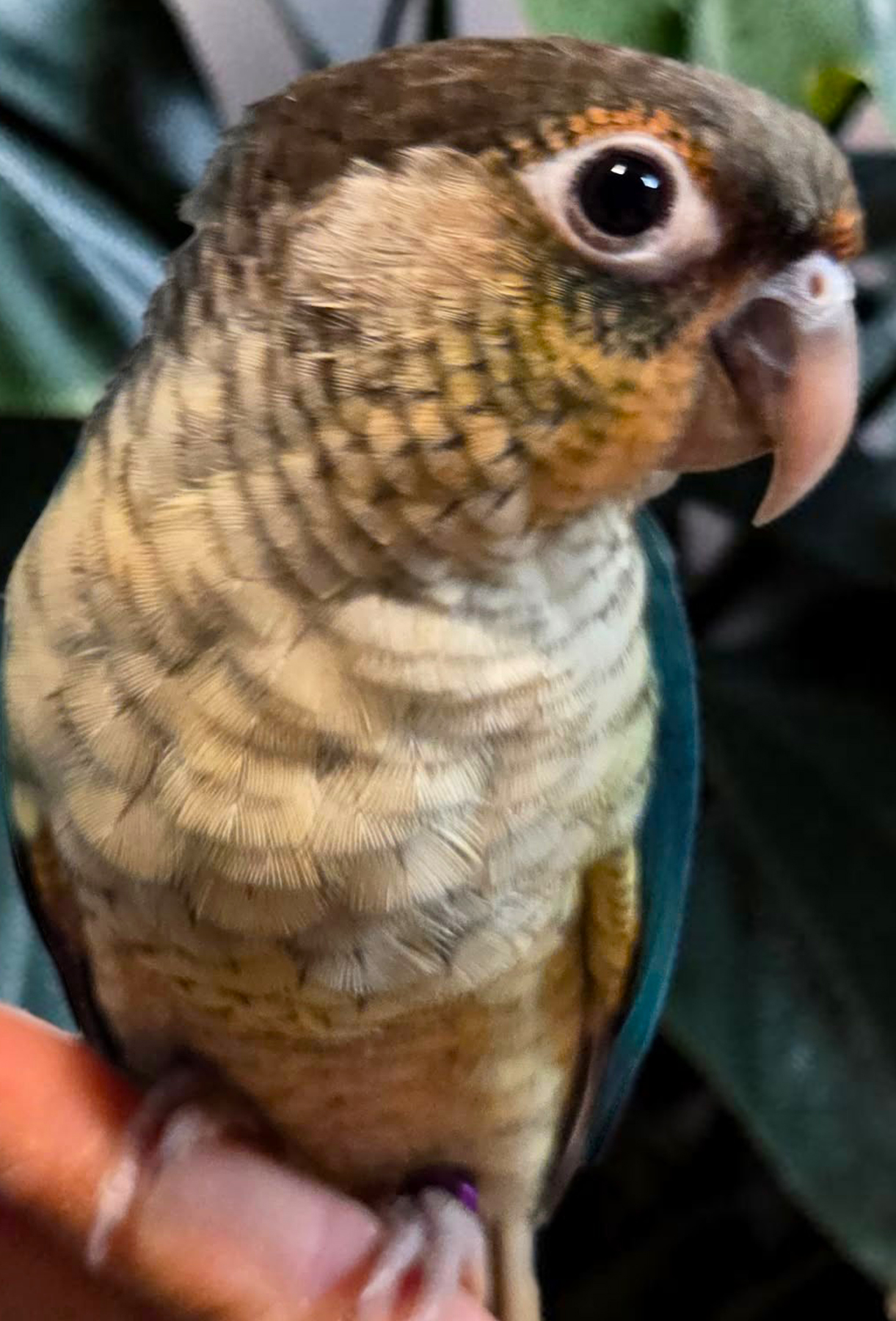
Violet Yellow-Sided Turquoise
Photo courtesy of Casey Baker
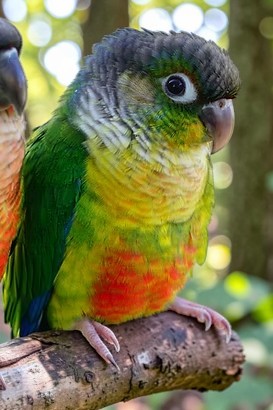
Violet Green Opaline
Photo courtesy of Casey Baker\
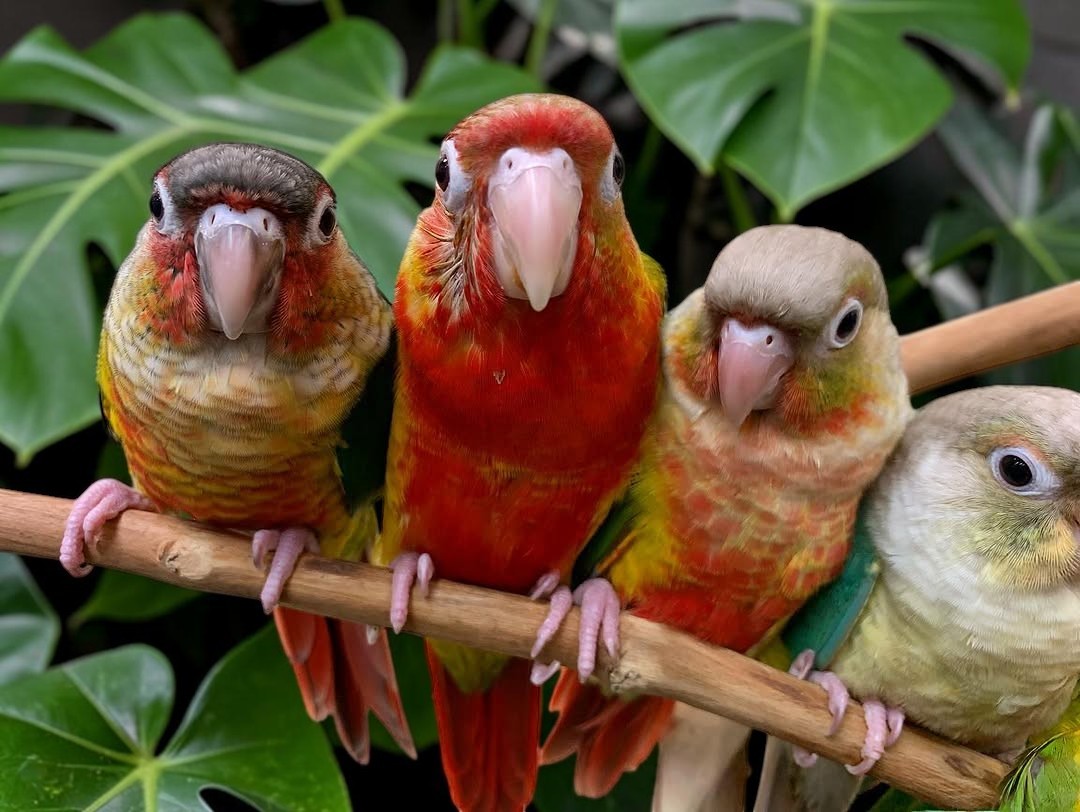
Multiple Mutations Together
HFFN member birds · Oʻahu
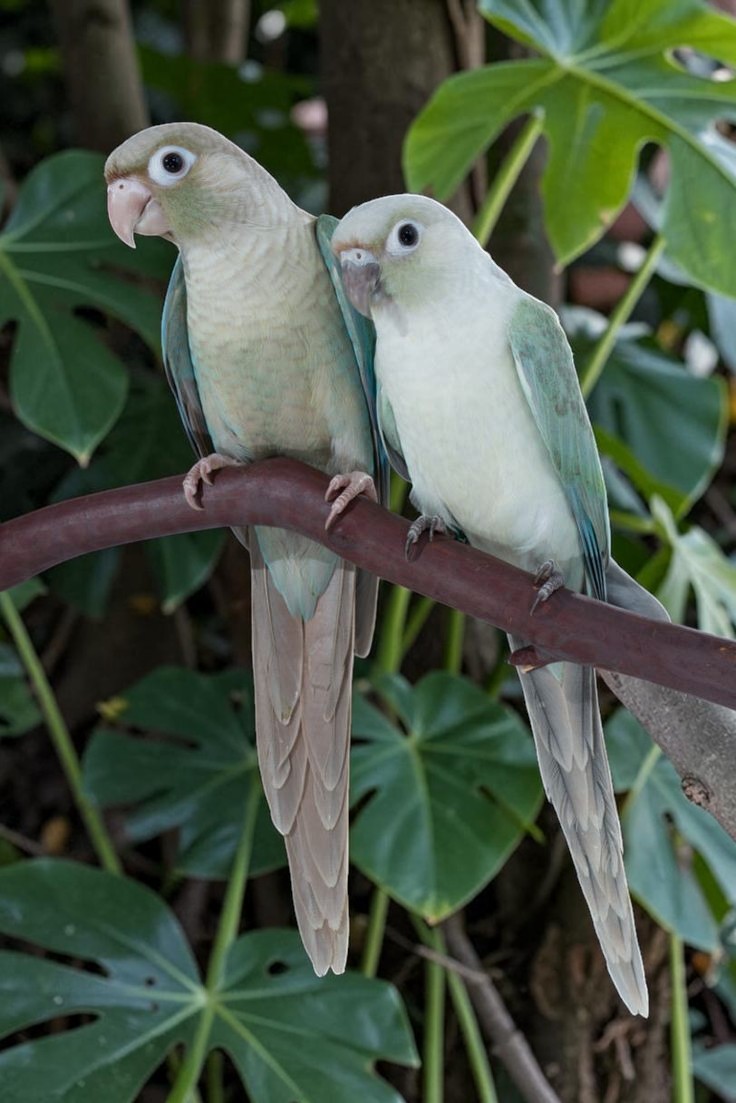
Pale Green Color Morph
HFFN member birds · Oʻahu
Pineapple
HFFN member photo · Oʻahu
High Red Pineapple
HFFN member photo · Oʻahu
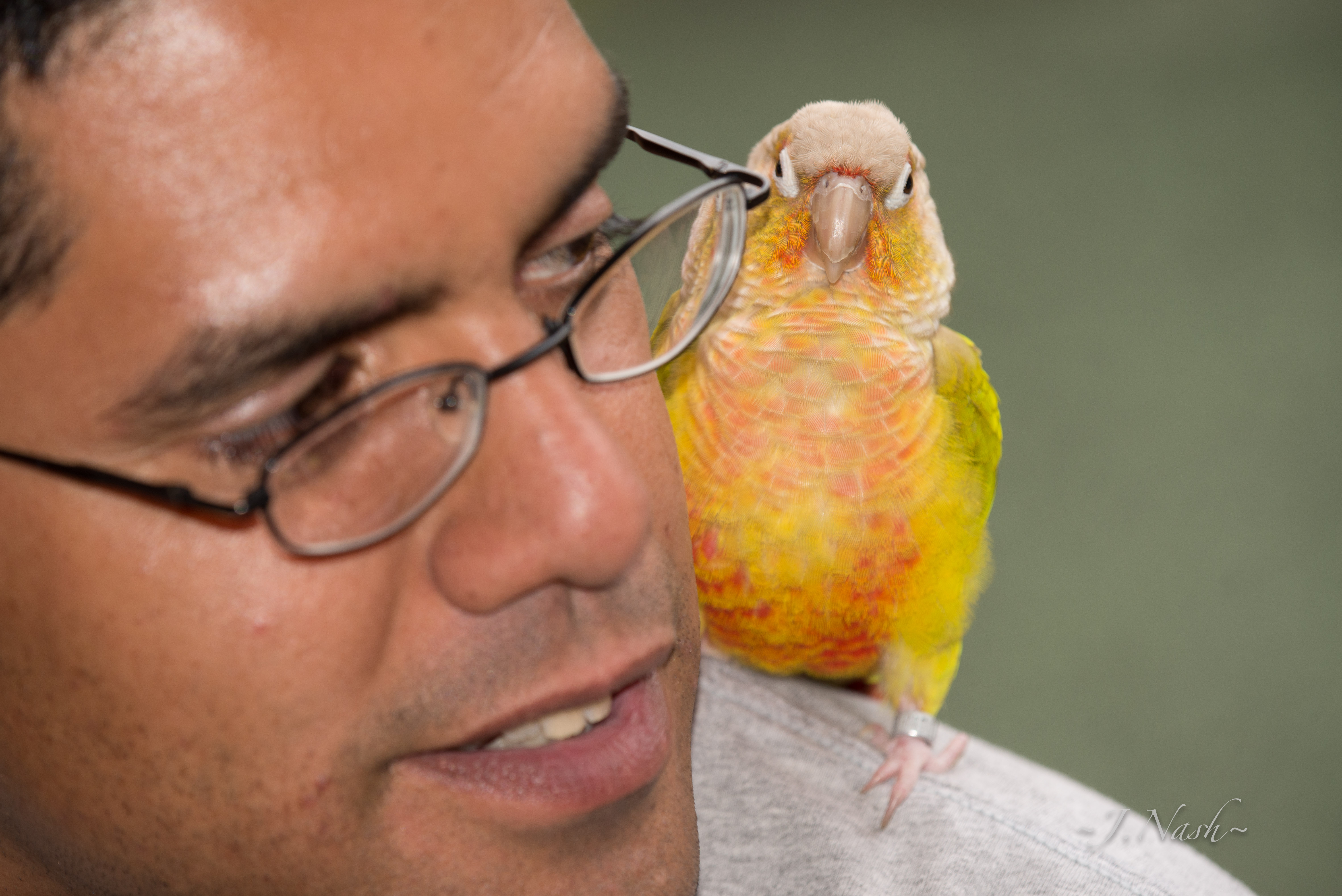
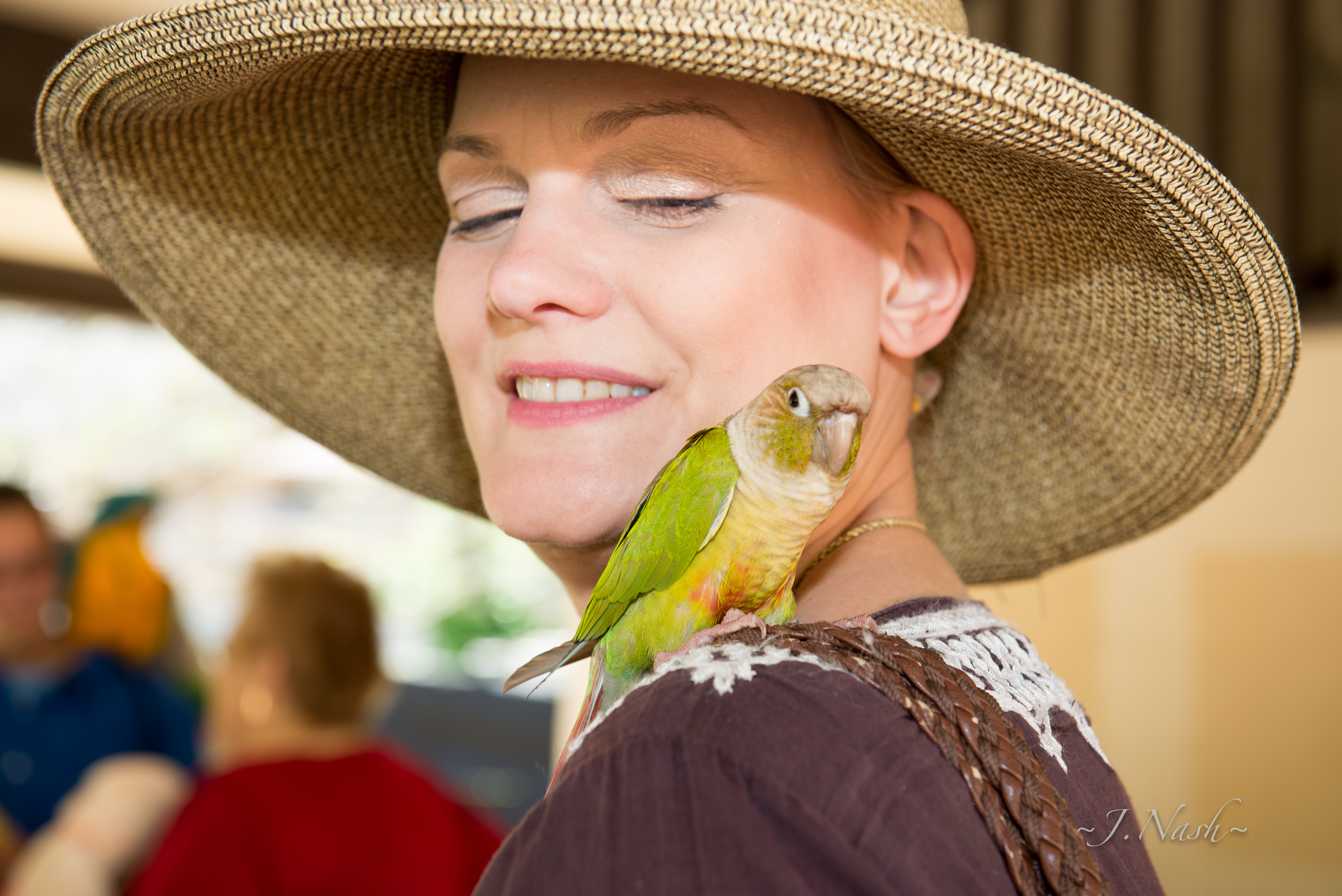
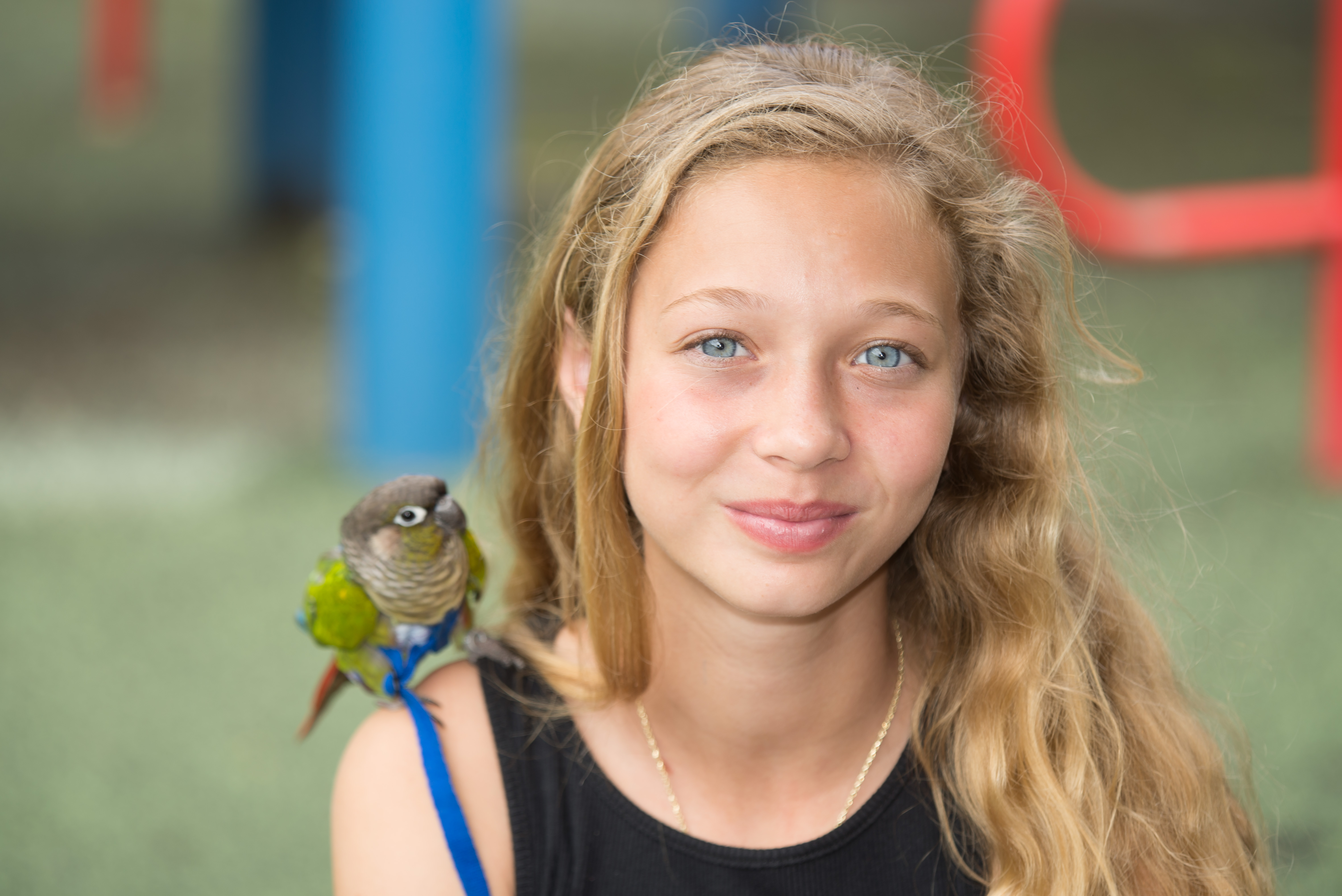
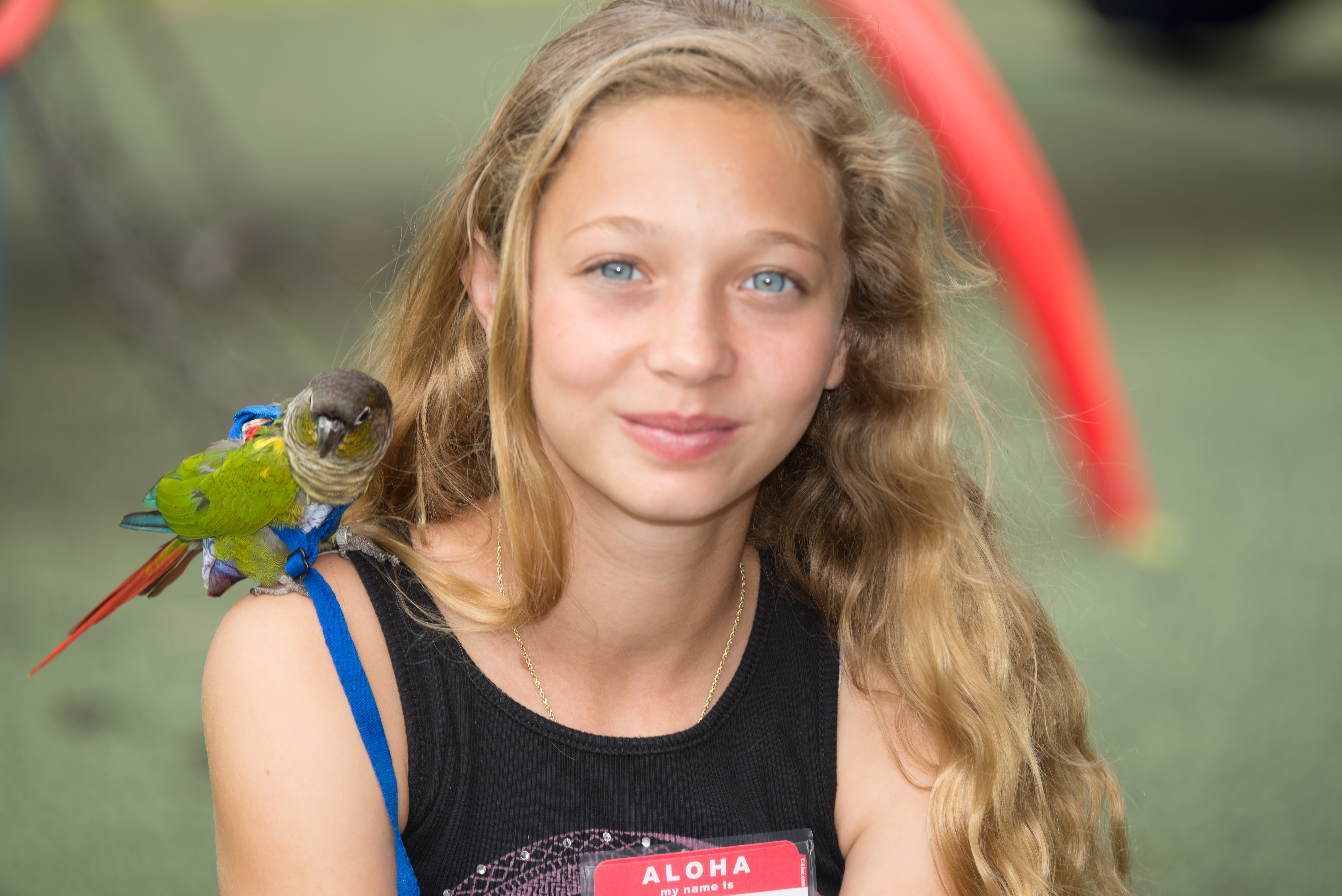
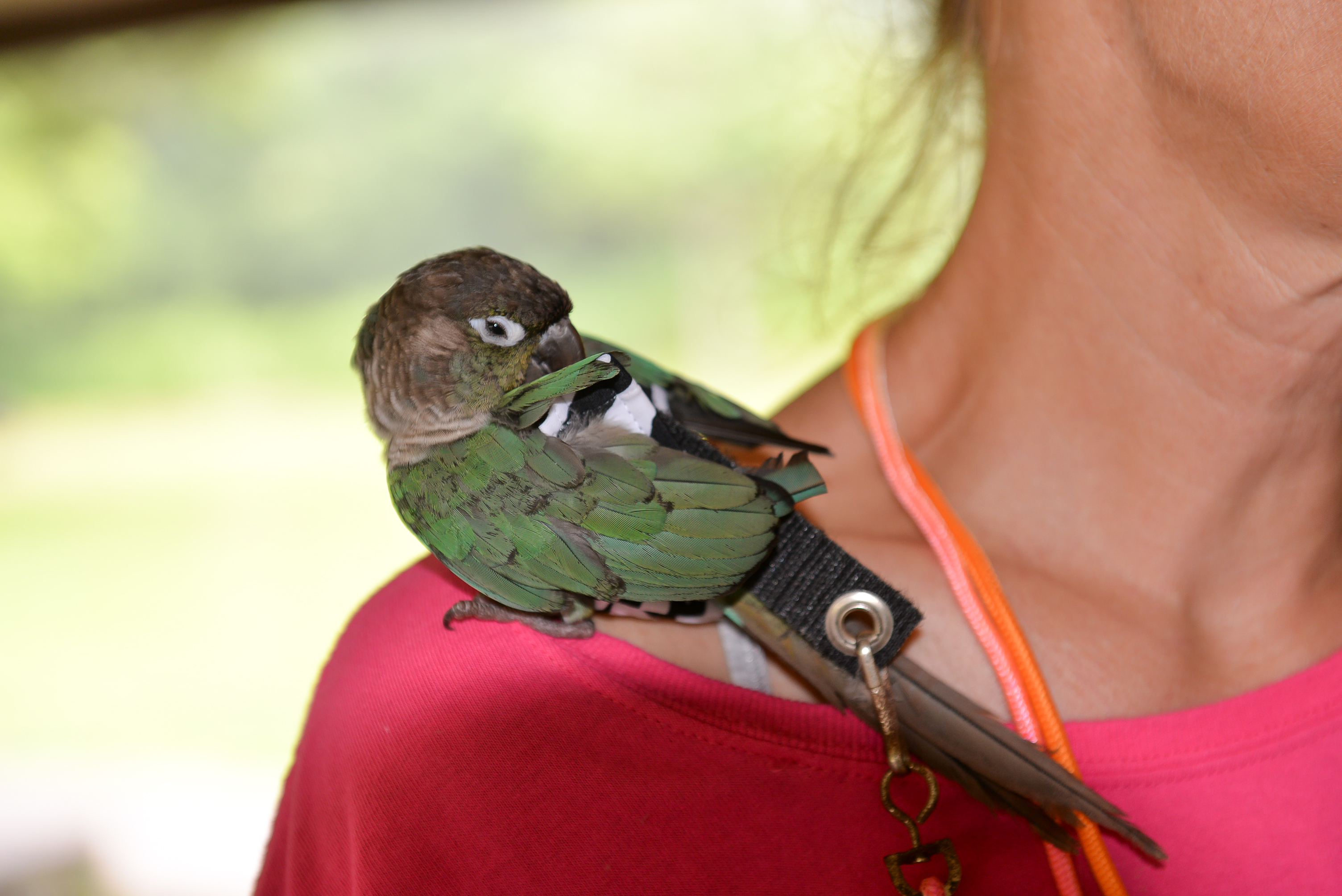
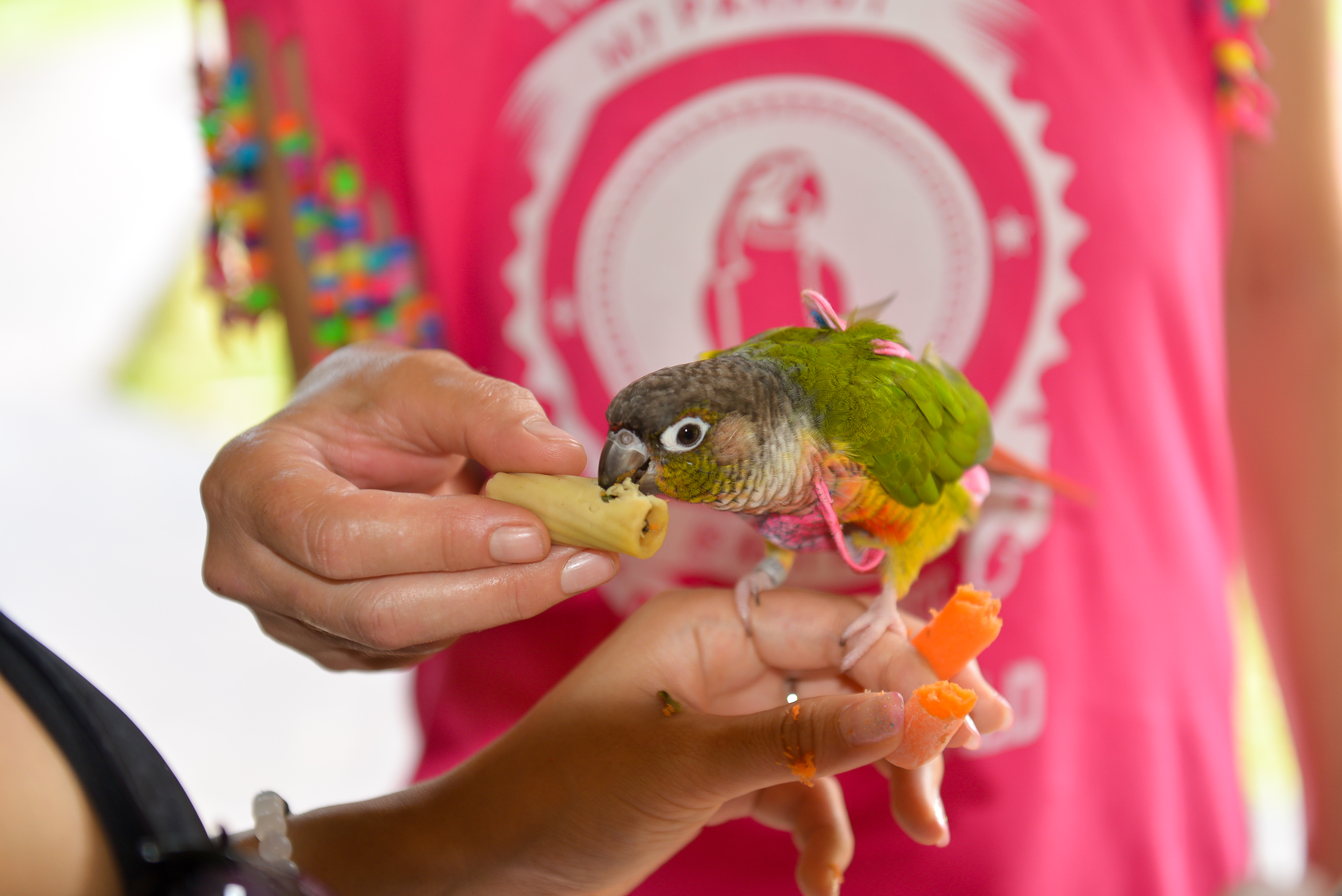
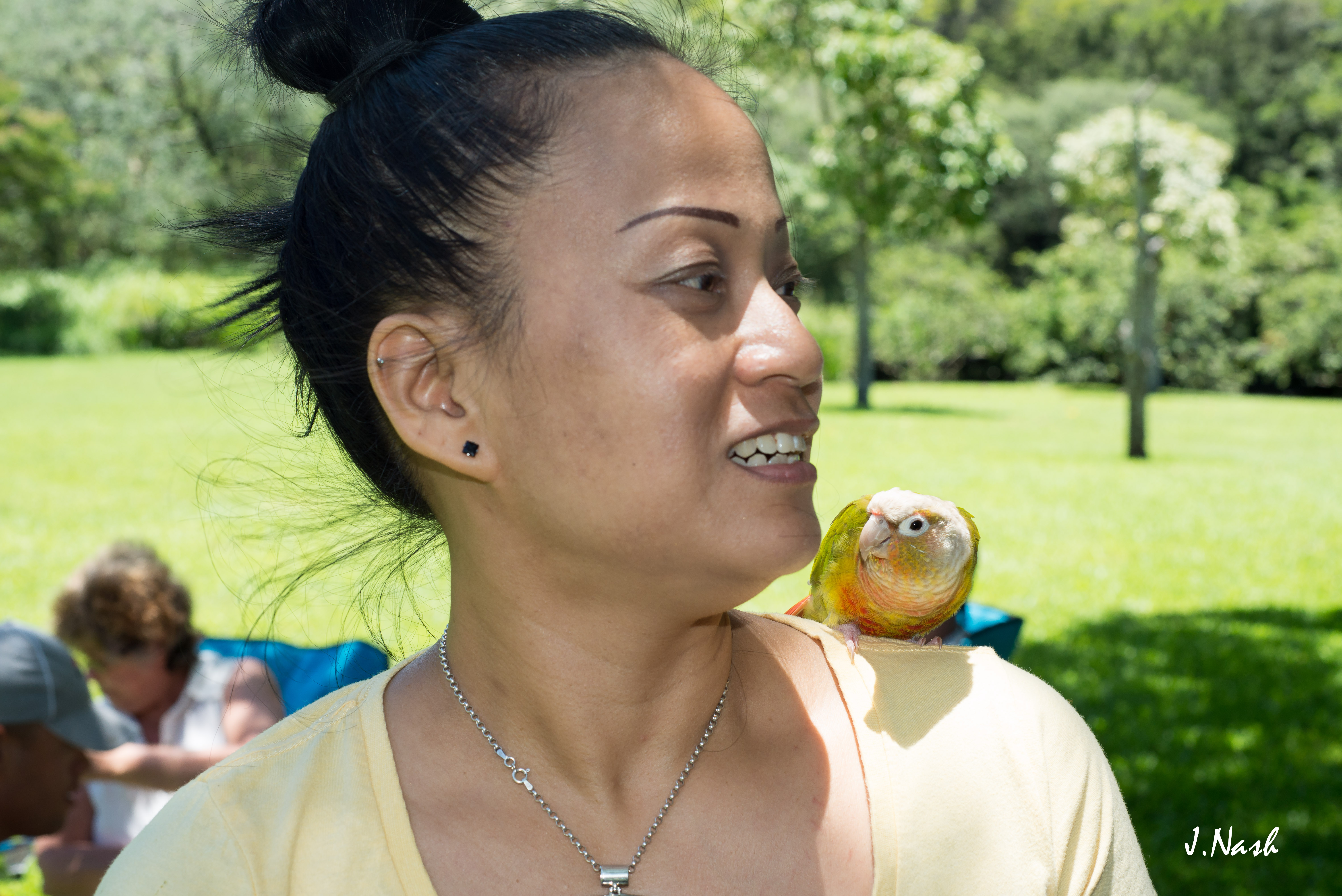
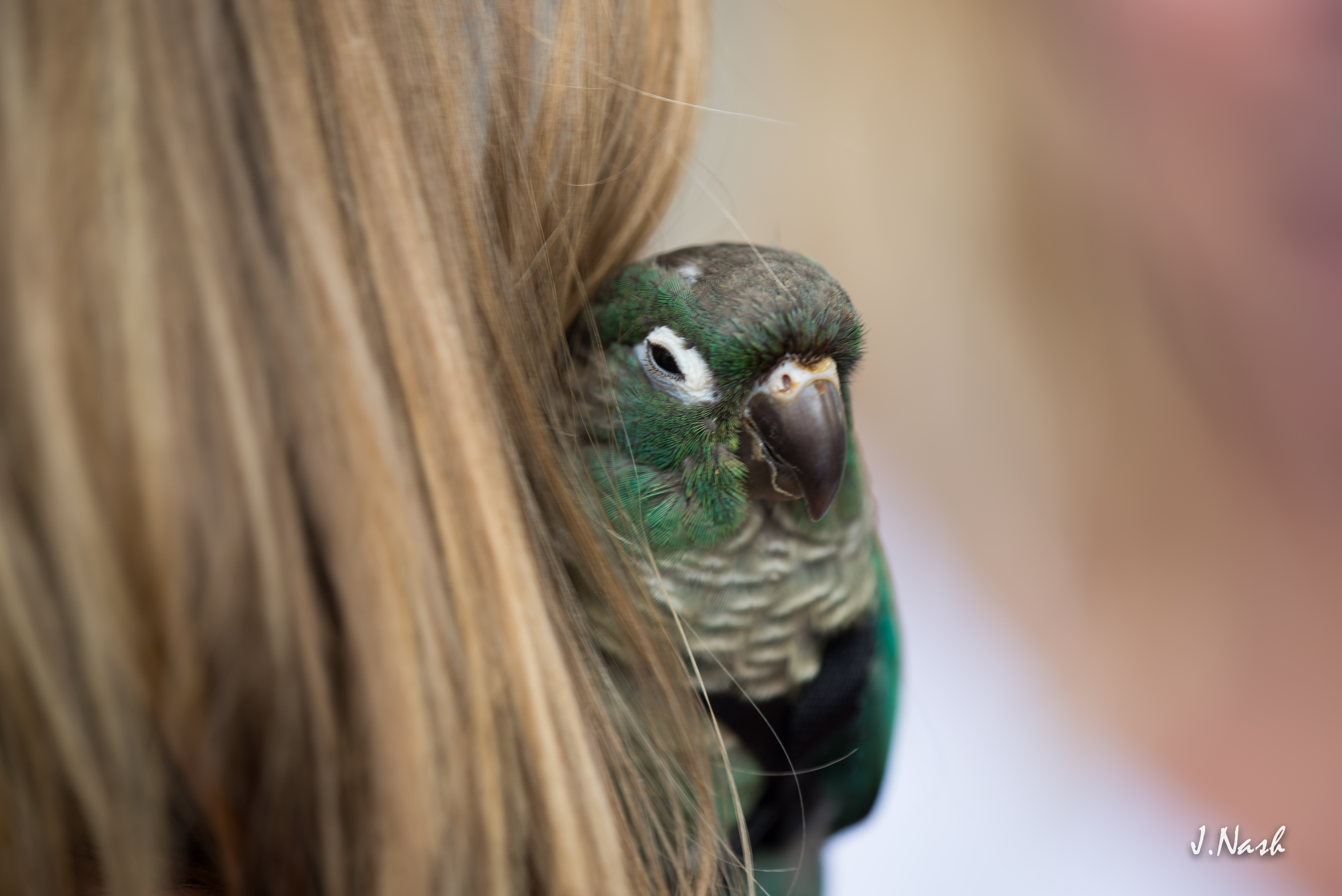
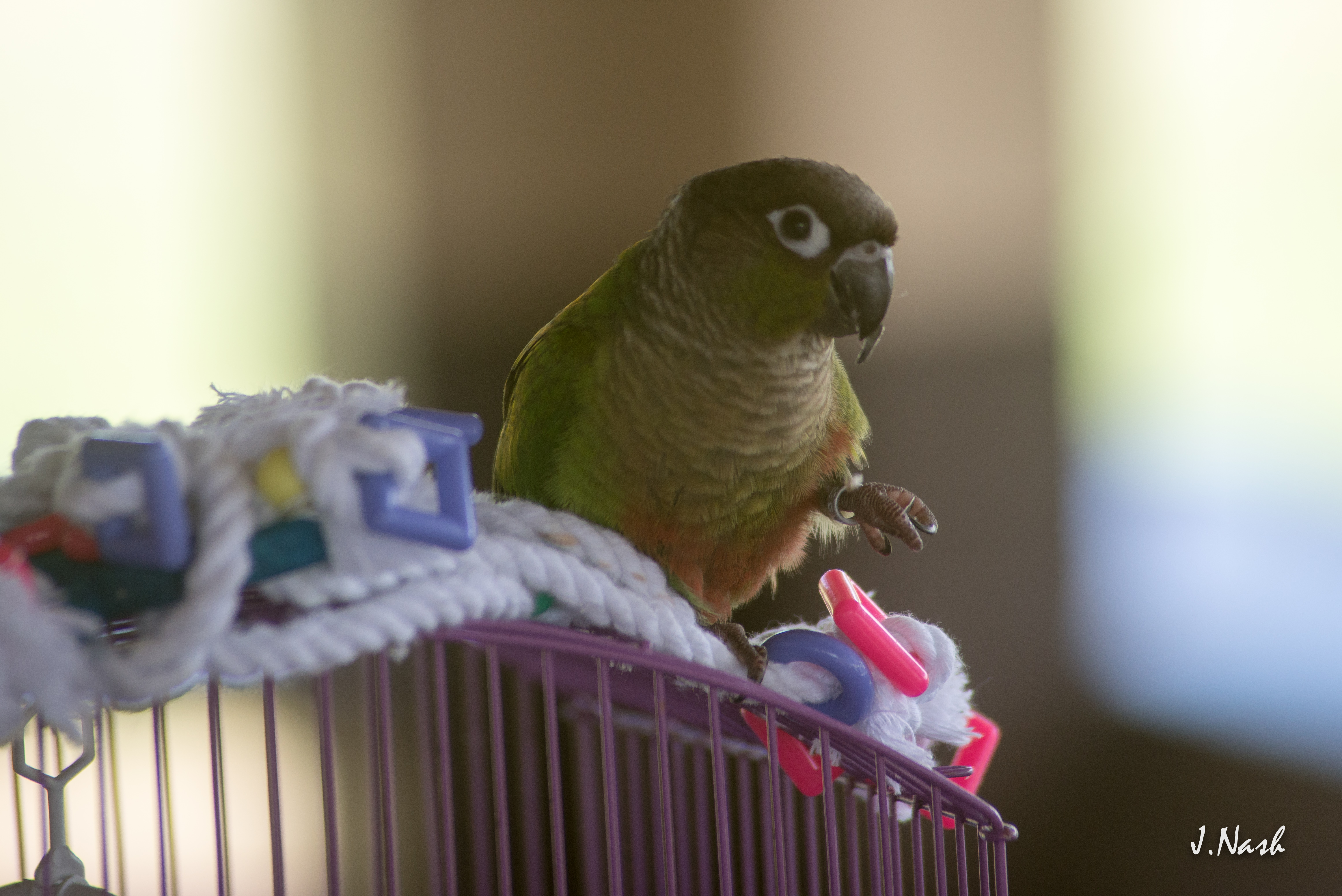
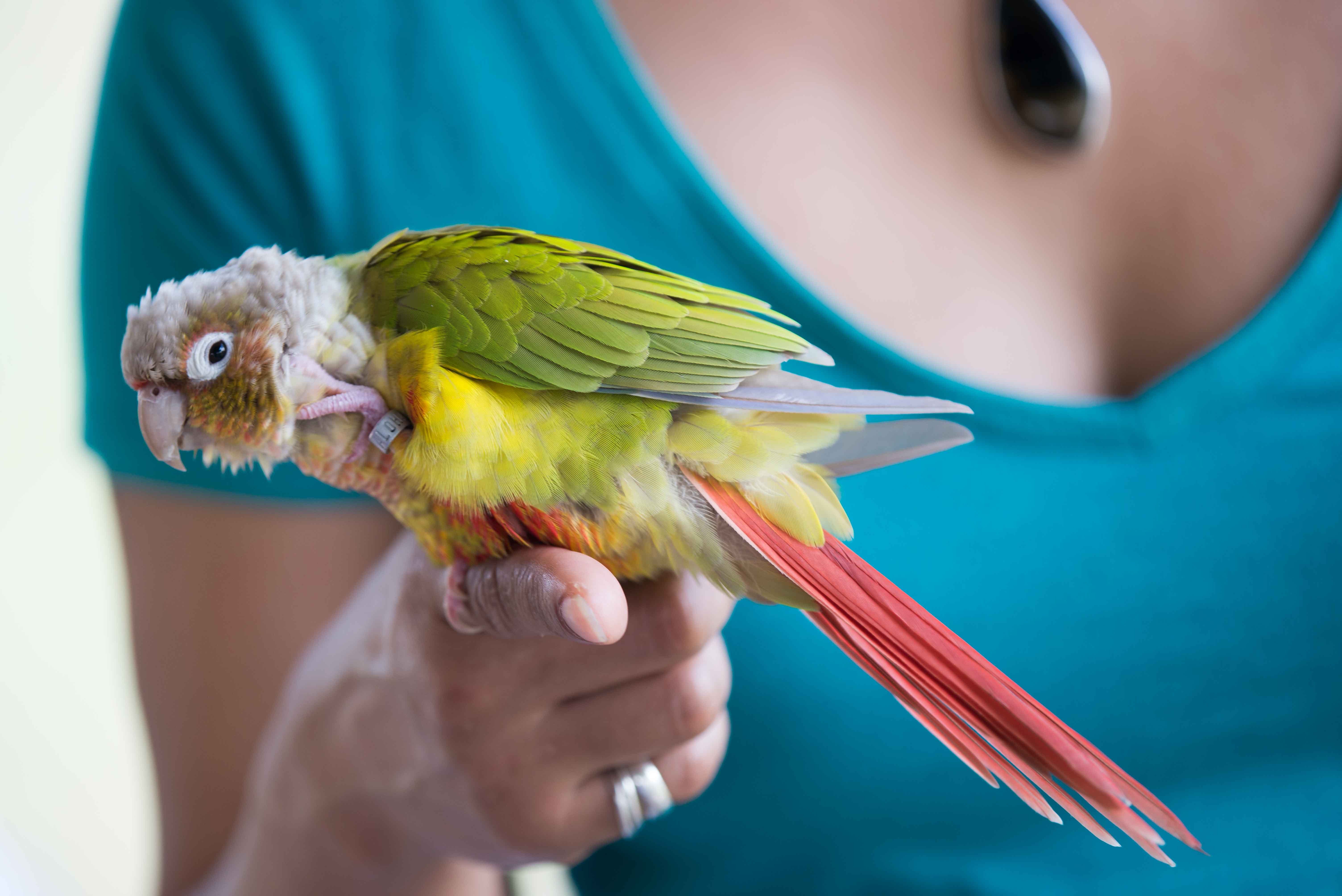
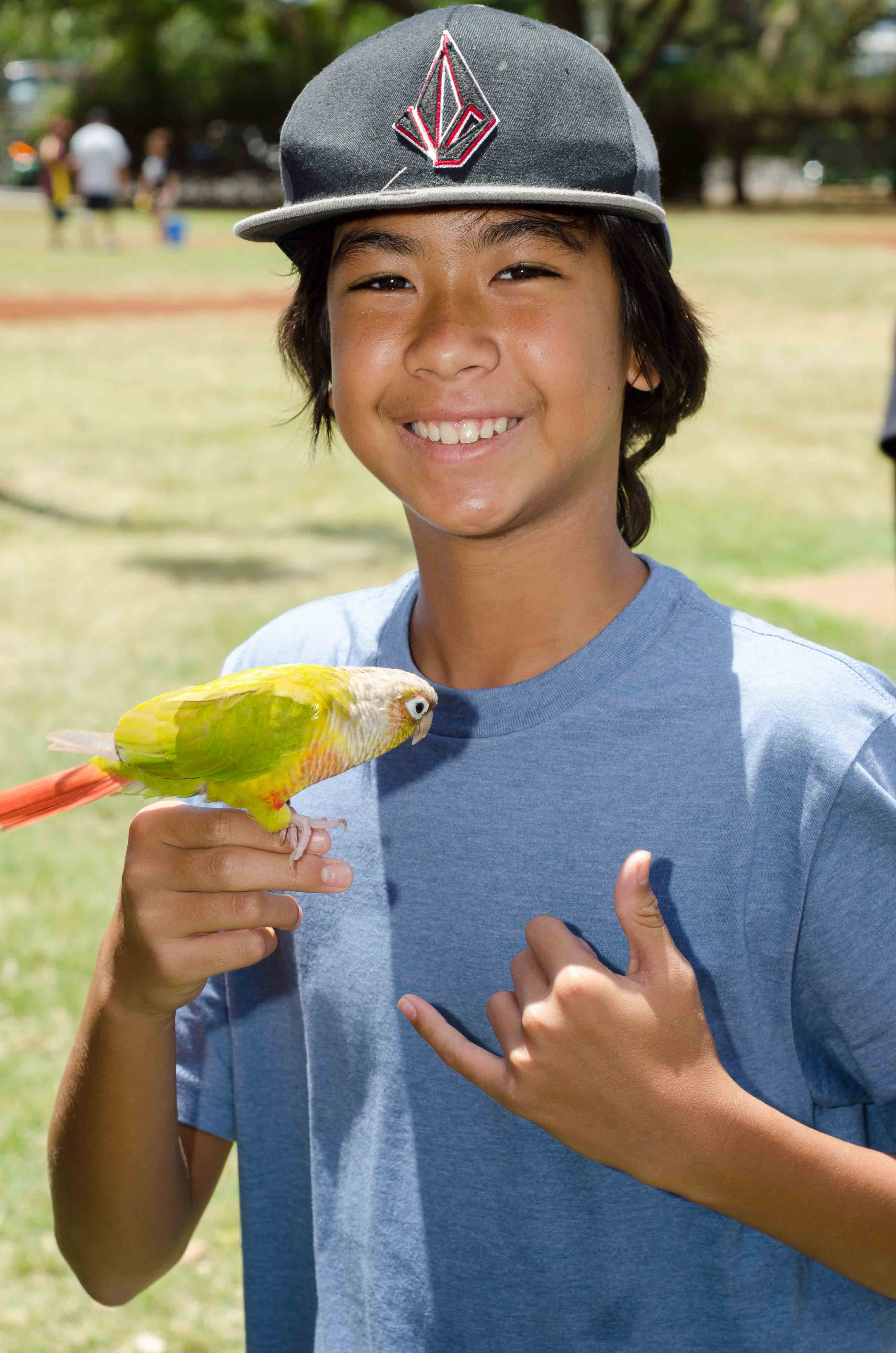
HFFN Members’ Green Cheeks — A Gallery:
Keeping Conures in Hawaiʻi
Care requirements vary somewhat between the louder Aratinga species (Sun, Jenday, Cherry-headed) and the quieter Pyrrhura species (Green Cheek, Black Cap), but the fundamentals are broadly similar across the conure family.
Housing: A minimum cage of 24 × 18 × 24 inches for smaller Pyrrhura species; 24 × 24 × 36 inches for larger Aratinga species. Bar spacing of ½ to ¾ inch. Conures are active birds that use all dimensions of their cage — multiple perch heights, foraging opportunities, and a generous selection of toys should be provided and rotated regularly.
Diet: A high-quality pelleted base comprising 60–70% of intake, supplemented with fresh vegetables, limited fruit, and very limited seed. Conures are prone to obesity on seed-heavy diets. In Hawaiʻi, fresh tropical produce makes an excellent dietary foundation year-round.
Social needs: All conures are highly social and do not do well with isolation. Daily out-of-cage interaction and playtime is essential. Aratinga species in particular can develop behavioral problems — excessive screaming, feather-destructive behavior — if their social needs are not met. If you work long hours and cannot provide daily interaction, consider keeping a pair.
Noise: The single most important consideration when choosing a conure species for a Hawaiʻi household. Aratinga species (Sun, Jenday, Cherry-headed) are loud enough to cause genuine problems in apartments and close-quarters living situations. Pyrrhura species (Green Cheek, Black Cap) are significantly quieter and are generally apartment-compatible. Be honest with yourself about your living situation before choosing a species.
Common Conditions to Watch For
Well-cared-for conures are generally hardy and long-lived — Green Cheeks typically reach 15–25 years; Sun and Aratinga species 20–30 years. The following conditions appear most frequently:
- Psittacosis (Chlamydia psittaci)
- Psittacine Beak and Feather Disease (PBFD)
- Proventricular Dilatation Disease (PDD)
- Conure Bleeding Syndrome (vitamin K deficiency)
- Aspergillosis (fungal infection)
- Feather-destructive behavior
- Obesity (seed-heavy diets)
- Vitamin A deficiency
- Heavy metal toxicity (zinc, lead)
- Polyomavirus
- Respiratory infections
- Cloacal prolapse
Conure Bleeding Syndrome — a condition involving spontaneous or excessive bleeding associated with vitamin K deficiency — is seen in some conure species and warrants particular attention. A diet rich in dark leafy greens (which are high in vitamin K) is an important preventive measure. Annual avian veterinary examinations with bloodwork are strongly recommended for all conures.
Conures in Rescue
Green Cheek Conures are the most frequently surrendered conure species in Hawaiʻi — most often because an owner did not research the species thoroughly before acquiring one, or because the bird’s playful nipping during adolescence was mismanaged and escalated into a biting problem. Both situations are preventable with better information up front, which is exactly why this page exists.
Sun Conures come into rescue most often because of noise — owners who underestimated the volume, or whose living situations changed to become incompatible with a loud bird. This is one of the most common and most preventable rescue situations in all of aviculture. Please research noise levels carefully before acquiring any Aratinga conure.
HFFN places conures of all species through our relationship-based adoption process. If you are interested in any of the species on this page, come to a meeting. We almost always have members present who keep the species you are interested in, and there is no substitute for spending time with a real bird in the hands of someone who loves them.