Hawaiian Feathered Friends Network
Hawaiʻi’s Premier Parrot Rescue · Education · Community Support · Parrot Club Organization
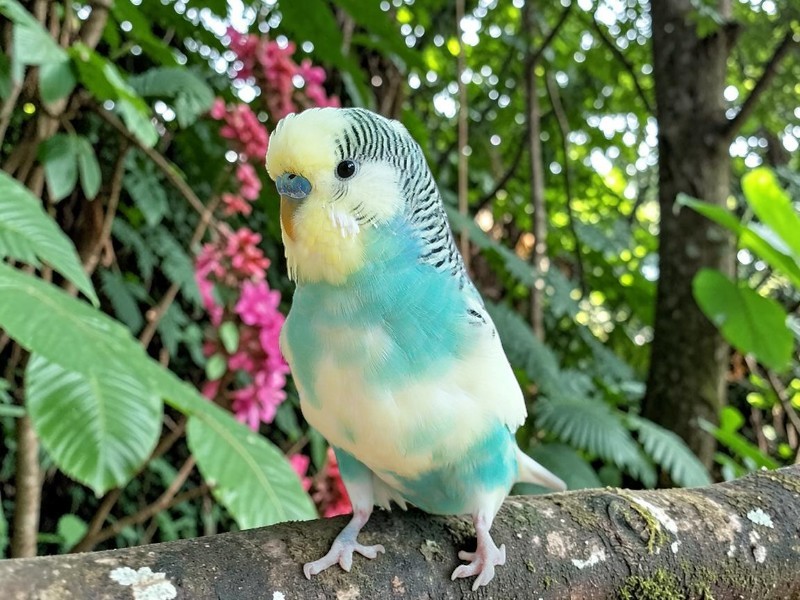
Budgie
BudgerigarBudgie — Parakeet — Shell Parrot
The most widely kept pet bird on earth — and one of the most underestimated. Budgerigars are fully intelligent parrots with remarkable talking ability, complex social needs, extraordinary color genetics, and a personality that far exceeds their modest size and price tag.
The World’s Most Popular Pet Bird — and a Genuine Parrot
Wild-type Budgerigar
Green and yellow
normal coloration
Add photo here
Wild-type Budgerigar — the natural green and yellow coloration
The Budgerigar (Melopsittacus undulatus) is the single most widely kept pet bird in the world — outpacing every other parrot species, every other bird species, and most other companion animals in sheer numbers. Estimates suggest hundreds of millions of budgerigars are kept in homes globally. In Hawaiʻi, they are among the most commonly kept psittacine birds across our membership and the broader bird-keeping community.
What frequently surprises people is just how much parrot is packed into this small package. Budgerigars are genuinely intelligent — they hold the world record for the largest vocabulary of any bird, with some individuals documented speaking over 1,700 words. They form deep social bonds, recognize their people, respond to emotional cues, and communicate with remarkable sophistication. They are not decorative objects. They are parrots.
In the wild, budgerigars are nomadic birds of the Australian interior — following rainfall and the seed crops it produces across the arid and semi-arid grasslands of the continent. Wild flocks can number in the hundreds of thousands of birds, moving as a unit across the landscape. This social biology has profound implications for how budgerigars should be kept in captivity: they are not birds that do well in isolation.
The budgerigar’s color genetics are among the most complex and extensively studied of any bird species. Over a century of selective breeding has produced more than 30 recognized mutations — and the combinations of these mutations produce hundreds of distinct visual varieties. The range of color available in budgerigars is genuinely extraordinary, from the wild-type green through sky blue, cobalt, violet, yellow, white, grey, albino, lutino, and an almost limitless range of patterned combinations.
A budgerigar costs almost nothing to acquire and almost nothing to house. What it costs is attention, time, and genuine engagement — and what it gives back, when those are provided, is a relationship that surprises almost everyone who experiences it.
The Wild-type Budgerigar — Where It All Begins
The wild-type budgerigar — the natural coloration before any mutation — is a vivid light green bird with a yellow face, black undulating (wavy) markings on the back, wings, and head, and a series of three black spots on each cheek flanking a violet cheek patch. The throat sports a series of black spots, and the long tail feathers are dark blue-green. It is a beautiful bird that is sometimes overlooked in favor of the more dramatic mutations — unfairly so.
Understanding the wild-type is essential for understanding budgerigar genetics. All mutations are departures from this baseline. The wild-type carries the dominant green series pigmentation, normal black melanin throughout the pattern markings, and normal feather structure. Every mutation category affects one or more of these components.
Wild-type Budgerigar
Male — blue cere
Add photo here
Wild-type Budgerigar
Female — brown cere
Add photo here
Wild-type Budgerigar
Flock or pair
Add photo here
Sexing Budgerigars — The Cere
The cere is the fleshy area at the base of the upper beak that surrounds the nostrils. In most adult budgerigars it is the most reliable visual indicator of sex — adult males typically have a blue cere; adult females have a brown, beige, or white cere that becomes more deeply brown and crusty during breeding condition. Young birds of both sexes have a pinkish-purple cere that changes as they mature. Note that some mutations — particularly lutino and albino — alter cere coloration and make visual sexing less reliable; DNA testing is definitive for these varieties.
Male budgerigar cere
Blue — add photo here
♂ Male — Blue Cere
Adult males typically display a smooth, bright blue cere. In some mutations (particularly recessive pied and some dark-eyed clears) the cere may be pink or purple even in adult males.
Female budgerigar cere
Brown — add photo here
♀ Female — Brown Cere
Adult females have a beige, white, or brown cere that darkens and becomes rougher in texture during breeding condition. A very dark brown crusty cere in a female indicates she is in or near breeding condition.
American Budgerigar vs. English (Exhibition) Budgerigar
Two distinct types of budgerigar exist in aviculture — the standard American budgerigar (also called the common or pet budgerigar) and the English budgerigar (also called the show or exhibition budgerigar). They are the same species but have been selectively bred for very different traits over many decades.
American Budgerigar
Standard pet type
Add photo here
American Budgerigar
The standard pet budgerigar — smaller (18–20 cm), slender, and active. Bred primarily for color mutations and as companion birds. Generally considered more energetic and better suited to taming and talking than the English type. More commonly available in Hawaiʻi and worldwide. The type most HFFN members keep.
English Exhibition Budgerigar
Show type — larger, feathered head
Add photo here
English (Exhibition) Budgerigar
Selectively bred for the show bench — significantly larger (up to 25 cm), with a massive rounded head, heavily feathered face mask, large spots, and a more upright posture. Generally calmer and less active than the American type. Considered by some breeders to be less adept at talking. More expensive, rarer, and require more experienced breeding management. Stunning show birds.
American and English Budgerigar
Side by side — size comparison
Add photo here
English Budgerigar
Show quality — head detail
Add photo here
The World’s Most Extensive Color Mutation Catalog
Budgerigar color genetics have been studied and selectively bred for over a century, producing the most extensive mutation catalog of any parrot species. Mutations are organized into categories based on what aspect of coloration they affect — the base color series, the pattern markings, the feather structure, or the eye color. Understanding these categories makes the genetics far more approachable than trying to memorize individual mutations in isolation.
1 · Color Series Mutations
Affects base body colorThe two fundamental color series in budgerigars are the Green Series (wild-type) and the Blue Series (the blue mutation, which removes the yellow pigment). All other mutations build on one of these two foundations. Within each series, Dark Factor modifies the shade — single dark factor produces a darker intermediate (Dark Green or Cobalt), double dark factor produces the darkest shade (Olive or Mauve).
Light Green
Dark Green
Olive Green
Sky Blue
Cobalt Blue
Mauve
Violet
Grey Green
2 · Yellow-face & White-face Mutations
Affects face and mask color in blue series birdsIn blue series birds, the face is normally white. The Yellow-face mutation introduces yellow pigment into the face of blue series birds, producing striking combinations. Two types of Yellow-face exist (Type I and Type II) with different visual effects. White-face is the absence of any yellow pigment even in green series birds.
Yellow-face
Type I Sky Blue
Yellow-face
Type II
White-face Blue
White-face Violet
3 · Dilute, Lutino & Albino Mutations
Reduces or removes melaninThese mutations affect the dark melanin pigment — diluting it, reducing it, or removing it entirely. The Lutino removes all melanin from green series birds (producing a yellow bird with red eyes); the Albino does the same in blue series (white bird, red eyes). The Dilute mutation partially reduces melanin, producing paler versions of base colors.
Lutino
Albino
Dilute Green
Dilute Blue
4 · Pattern Mutations
Affects the black undulating markingsPattern mutations affect the characteristic black undulating markings on the back, wings, and head of the budgerigar — either changing their color, redistributing them, or removing them entirely. These are some of the most visually dramatic mutations in budgerigar aviculture.
Cinnamon Green
Greywing
Clearwing
Opaline
Spangle
Double Spangle
Recessive Pied
Dominant Pied
- Australian Dominant Pied — Variable yellow or white patches; one copy of the gene produces the effect
- Dutch Pied (Clearflight) — Single flight feather and small head spot clear of markings
- Dark-eyed Clear — Near-white or near-yellow with no markings and dark (not red) eyes; actually a combination of recessive pied + dilute
- Fallow — Reduced melanin with red or plum-colored eyes; several sub-varieties exist
5 · Feather Structure Mutations
Affects the physical structure of feathersUnlike color mutations, feather structure mutations change the physical form of the feathers themselves — their length, texture, curl, or growth pattern. These mutations affect the bird’s overall silhouette rather than its color.
Long-feather (Feather Duster)
Add photo here
Crested Budgerigar
Add photo here
Crested — half circular or tufted
Add photo here
- Crested — A crest of feathers on the top of the head; three forms: full circular, half circular (front-facing), and tufted. Dominant mutation. Homozygous crested is lethal.
- Long-feather (Feather Duster) — Dramatically elongated feathers covering the entire bird; a tragic mutation that causes severe health problems and very short lifespan. Not encouraged in responsible aviculture.
⚠️ A Note on the Feather Duster Mutation
The Feather Duster (long-feather) mutation produces birds that are visually dramatic but suffer severely — they cannot fly, often cannot see, and typically live only weeks to months. HFFN does not encourage the breeding of Feather Duster budgerigars. Responsible breeders work to minimize the appearance of this mutation in their breeding programs.
6 · Notable Multi-gene Combinations
When mutations combine — the most spectacular resultsThe most visually spectacular budgerigars are often the result of combining multiple mutations. Some of the most sought-after combinations in aviculture include:
Opaline Cinnamon
Opaline Spangle
Violet Cobalt Spangle
Opaline Clearwing
Rainbow Budgerigar
Cinnamon Opaline
Lacewing
Slate
The “Rainbow” Budgerigar
The Rainbow is one of the most sought-after budgerigar varieties — a multi-gene combination of the Opaline, Clearwing (or Greywing), Yellow-face Type II, and Blue series mutations. The result is a bird with a vivid yellow face, sky blue body, minimal wing markings, and the opaline mantle pattern — producing a stunning multicolored effect that has earned it the name. True Rainbows require careful breeding records to produce reliably.
7 · Australian Show & Exhibition Standards
For members interested in competitive exhibitionBudgerigar exhibition is a well-established competitive hobby worldwide, governed in Australia by the Budgerigar Council of Australia and internationally by the Budgerigar World Organisation (BWO). Show budgerigars are judged on size, feather quality, head shape, spot size and definition, mask depth, posture, and overall deportment — as well as correct coloration for their variety.
Show quality English Budgerigar
Exhibition bird on show perch
Add photo here
Budgerigar show cage
Standard exhibition presentation
Add photo here
HFFN members interested in budgerigar exhibition are encouraged to connect with the Budgerigar Society of Hawaii and regional breeders who specialize in show-quality birds. Exhibition budgerigar breeding is a specialized pursuit with its own deep community of practitioners.
Budgerigars in the Islands
Budgerigar — HFFN member’s bird
on Oʻahu
Add photo here
HFFN member’s budgerigar · Oʻahu
Budgerigars are among the most commonly kept birds in Hawaiʻi — found across all the islands in homes ranging from casual pet ownership to serious breeding operations. Because budgerigars are on the Conditionally Approved list and are exempt from the leg band and microchip requirements that apply to larger parrots, they are more straightforward to import and keep than many other psittacine species.
Small feral budgerigar populations have been documented in Hawaiʻi over the years — escaped individuals occasionally join other small flock birds in suburban areas — but no established self-sustaining feral population comparable to the Rose-ringed Parakeet flocks has been documented. Budgerigars in the Hawaiian wild are typically individual escapees rather than breeding colonies.
Hawaiʻi’s climate suits budgerigars well. The warm, humid tropical environment is compatible with the budgerigar’s Australian origin, and year-round fresh produce availability makes providing an excellent diet straightforward. Outdoor aviaries are practical for much of the year on most islands, though care should be taken to protect birds from heavy rainfall and predators — particularly the introduced mongoose on the main islands.
Intelligence, Talking, and Social Needs
Budgerigars are genuinely intelligent birds with remarkable cognitive abilities that are often underappreciated because of their small size and low price. The budgerigar holds the verified world record for the largest vocabulary of any bird — a bird named Puck was documented speaking 1,728 words. While most pet budgerigars develop more modest vocabularies, many individuals learn dozens of words and phrases, and some become remarkably clear and contextual speakers.
Male budgerigars are generally better talkers than females — a sex-linked difference that holds reasonably consistently across the species. Young birds (under six months) learn language most readily, making early and consistent verbal interaction important for developing talking ability. That said, individual variation is significant — some females talk well, and some males never develop the inclination.
Budgerigars are deeply social birds. In the wild they live in large flocks and are rarely alone. In captivity, a single budgerigar with insufficient human interaction is a bird that is likely to be lonely, bored, and potentially prone to behavioral problems including excessive screaming, feather-destructive behavior, and health decline. If you cannot provide at minimum an hour or two of genuine interaction daily, keeping two budgerigars rather than one is strongly recommended.
Budgerigar on finger
Tame hand-raised bird
Add photo here
Pair of budgerigars
Bonded pair together
Add photo here
Budgerigar with toy
Enrichment and play
Add photo here
One Budgerigar or Two?
This is one of the most common questions HFFN hears about budgerigars. A single budgerigar that receives consistent daily interaction from a committed keeper can bond deeply with that person and thrive — and will typically develop better talking ability than a bird with a companion, since it has no budgerigar flock to communicate with and directs its social energy toward its human. Two budgerigars will bond with each other and are less dependent on human interaction — but they are also less lonely, which matters. The honest answer depends entirely on your lifestyle and how much time you can genuinely commit to a single bird.
Keeping Budgerigars Well
Housing: The minimum cage for a single budgerigar is 18 × 18 × 18 inches — but larger is always better, and wider is more important than taller since budgerigars fly horizontally. Bar spacing of ½ inch maximum. Natural wood perches of varying diameters promote foot health; sandpaper perch covers are not recommended and cause foot problems. Multiple perch heights and positions allow exercise and natural movement patterns.
Diet: Seed alone is inadequate for budgerigar health — it is too high in fat and too low in vitamins, particularly vitamin A. A high-quality small parrot pellet should form the base of the diet (40–60% of intake), supplemented generously with fresh vegetables daily. Dark leafy greens, broccoli, carrot, sweet potato, and bell pepper are excellent. Fresh fruit in small amounts. Seed can be offered as a supplement rather than a staple. Grit is not necessary or recommended for budgerigars — they hull their seed before swallowing and do not need insoluble grit.
Enrichment: Foraging toys, mirrors (in single birds), bells, chew items, and swings are all appropriate. Rotate toys regularly to maintain novelty. Budgerigars kept without enrichment become bored and may develop stereotypic behaviors. Cuttlebone or mineral block provides calcium and beak conditioning.
Temperature: Budgerigars are comfortable between 65–85°F — Hawaiʻi’s climate is generally ideal. Avoid drafts and sudden temperature changes. Direct sun exposure without shade is dangerous; partial shade is always needed.
⚠️ Household Hazards for Budgerigars
Budgerigars are particularly sensitive to airborne toxins. Non-stick (PTFE/Teflon) cookware heated above normal cooking temperatures releases fumes that are rapidly fatal to budgerigars and other birds. Scented candles, air fresheners, aerosol sprays, cigarette smoke, and certain cleaning products are also dangerous. Never use non-stick cookware in a kitchen shared with free-flying birds, and ensure good ventilation whenever any aerosol product is used in the home.
Common Conditions to Watch For
A well-cared-for budgerigar on an appropriate diet can live 10–15 years or more — considerably longer than the 5–8 year average seen in birds on seed-only diets. Budgerigars are good at concealing illness until it is advanced, making regular observation and annual veterinary checkups important. The following conditions appear most frequently:
- Avian Gastric Yeast (Megabacteria / AGY)
- Psittacine Beak and Feather Disease (PBFD)
- Scaly face and leg mite (Knemidokoptes)
- Tumors — lipomas and testicular tumors particularly common
- Fatty liver disease (seed-heavy diets)
- Thyroid disorders (iodine deficiency)
- Polyomavirus
- Psittacosis (Chlamydia psittaci)
- Egg binding (females)
- Chronic egg-laying (females)
- Overgrown beak and nails
- Respiratory infections
Scaly face mite (Knemidokoptes pilae) is a common budgerigar condition producing crusty, honeycombed growths around the beak, cere, and sometimes legs and feet. It looks alarming but is easily treated with a veterinary-prescribed topical medication. If you see unusual crusty growths around your budgerigar’s beak or cere, consult an avian vet promptly — early treatment prevents permanent deformity. Annual avian veterinary checkups are strongly recommended for all budgerigars.
Healthy budgerigar
Bright eyes · smooth beak · upright posture
Add photo here
HFFN member budgerigar
Oʻahu
Add photo here
Budgerigars in Rescue
Budgerigars are among the most commonly surrendered birds in Hawaiʻi — partly because they are so inexpensive to acquire that people do so without adequate research, and partly because they breed readily and produce offspring in greater numbers than owners anticipate. HFFN places budgerigars through our adoption process and regularly has individuals and pairs available.
A rescue budgerigar may be untamed, poorly socialized, or on an inadequate seed-only diet. With patient handling, appropriate diet, and proper enrichment, most budgerigars adapt to a new environment within weeks to months and reveal the engaging, intelligent personalities that make this species so rewarding. Young birds tame most readily; older birds require more patience but are absolutely capable of forming new bonds.
If you are interested in adopting a budgerigar, come to an HFFN meeting. Budgerigars are well represented in our membership, and we are happy to help match you with the right bird for your household and experience level.