Hawaiian Feathered Friends Network
Hawaiʻi’s Premier Parrot Rescue · Education · Community Support · Parrot Club Organization
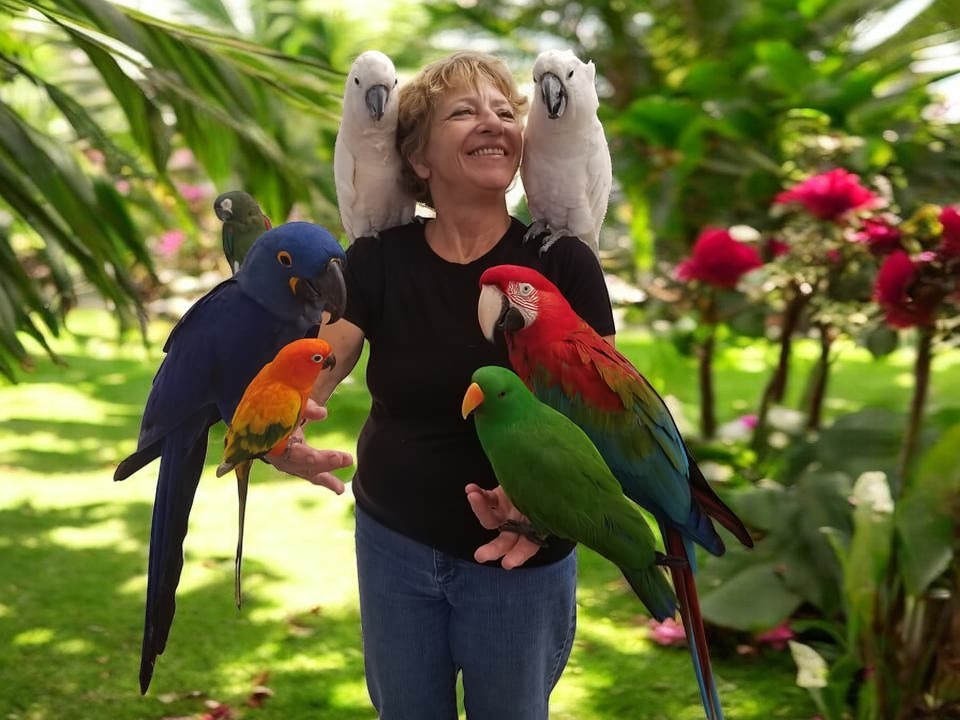
Parrots in Hawaiʻi Honest guides for every species — written for the islands
Hawaiʻi has no native parrots — but our islands are home to one of the most diverse and passionate parrot communities anywhere in the world. These are our birds, our guides, and our aloha.
The parrots kept by HFFN members represent nearly every corner of the parrot world — from the vast rainforests of the Amazon Basin to the savannas of sub-Saharan Africa, from the ancient forests of Australia and New Guinea to the island chains of the Pacific and Indian Oceans. They range in size from the tiny Budgerigar to the enormous Hyacinth Macaw. They range in personality from the serene Meyers Parrot to the exuberant Sun Conure. What they share is a place in the lives and hearts of Hawaiʻi’s bird-keeping community.
These guides are honest and practical, written from the perspective of people who live with these birds every day. We cover personality, care requirements, health, and conservation status — everything a prospective owner or curious enthusiast needs to know. We also cover what makes keeping parrots in Hawaiʻi different from anywhere else on earth: the climate, the regulations, the unique challenges and rewards of island aviculture.
Wild Parrots of Hawaiʻi
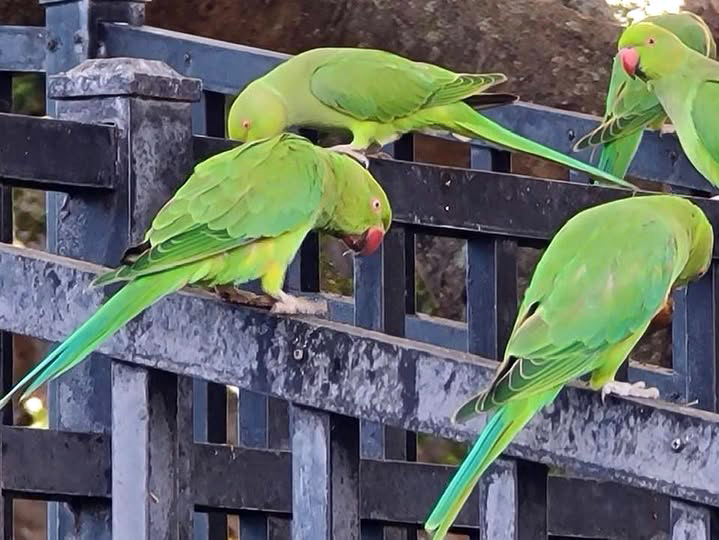
A Comprehensive Island-by-Island Guide
Hawaiʻi has no native parrots — but several introduced species have established self-sustaining wild populations across the islands. Rose-ringed Parakeets number in the tens of thousands on Kauaʻi. Red-crowned Amazons breed in the valleys of Oʻahu. Six cockatoo species have been documented at Lyon Arboretum in Mānoa Valley for over 50 years. This comprehensive guide covers every established and documented feral parrot species in the Hawaiian archipelago, drawing on the Bishop Museum’s Pyle & Pyle (2017) monograph and current field data.
Read the full island-by-island guide →Species Guides for Hawaiʻi’s Bird-Keeping Community
The following pages cover the psittacine species most commonly kept by HFFN members and the broader Hawaiʻi bird-keeping community. Each guide includes species information, personality, care requirements, health considerations, and conservation status.
Don’t see your species? Our community covers far more ground than our published guides — reach out via the Contact page or post your question in the Hawaiʻi Parrot Forum on Facebook. Our members include experienced aviculturists across virtually every psittacine species kept in the islands. We also welcome suggestions for future species pages — if you keep a species we haven’t covered and want to contribute, let us know.